Nickelodeon in the 80s · The Channel Before the Empire
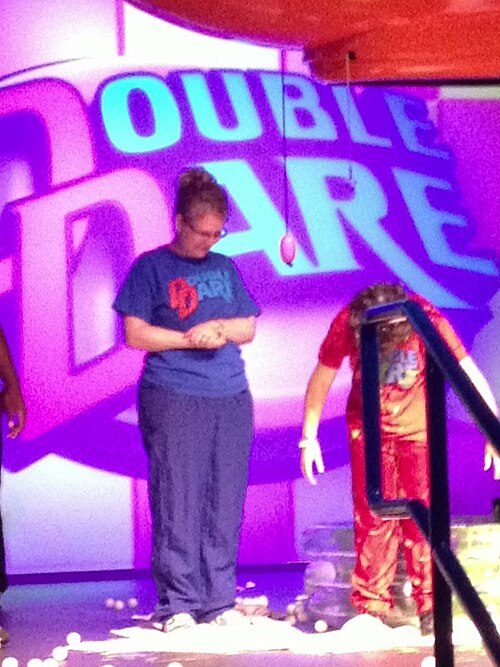
The Nickelodeon most people picture, the orange splat and the animation studio and the awards show, is the 90s one. The 80s version was a different company: a channel fighting for carriage, buying programs it could afford rather than making them, and stumbling into the one piece of intellectual property it never had to pay for. This page indexes what the record actually supports about that decade.
Nickelodeon in the 80s ran largely on acquired programming rather than shows of its own. Its defining series was Canadian: You Can't Do That on Television joined the schedule in January 1982 and was the network's highest-rated show by 1983. Danger Mouse, made in England, was one of the first two animated series it ever aired, on June 4, 1984. Its first game show, Double Dare, did not arrive until October 6, 1986.
1979 to 1981: borrowed and cheap
Nickelodeon officially launched April 1, 1979, on Warner Cable franchises, the first television network built for children. It grew out of Pinwheel, a preschool block that had run since 1977 on a single Columbus, Ohio, cable system, and for its first years the new national channel was still built almost entirely on programs it could license rather than make. New arrivals through 1980 included Dusty's Treehouse, First Row Features, Special Delivery, What Will They Think Of Next?, and Livewire, an acquired lineup that filled hours cheaply while the network found its footing.
Two logos, two eras
The channel changed its face twice in the years this cluster covers, and both changes are dated precisely. On April 12, 1981, Nickelodeon adopted a new logo designed by Lou Dorfsman and Bob Klein, a silver ball behind multicolored lettering. On October 1, 1984, the network rebranded again: the ball gave way to the "splat," the Nickelodeon name set in the rounded Balloon typeface over a shifting orange background, designed by Fred/Alan Inc. Within six months of that second change, Nickelodeon had become the dominant channel in children's programming, a position the record says it held for the next 26 years. The 80s Nickelodeon most people can picture, orange and loose and confident, only existed after that October 1984 rebrand; the years between April 1981 and that rebrand ran under the earlier, quieter ball logo.
The show that gave the network its personality
Everything downstream starts with one Ottawa sketch show made for a local station.
The full story of You Can't Do That on Television covers how a program that premiered on CJOH-TV in February 1979 ended up defining an American cable channel it had nothing to do with, and how the green slime got invented by an accident nobody tells the same way twice.
The cast of You Can't Do That on Television is the companion guide: two adult actors playing every grown-up on the show across ten seasons, and more than a hundred Ottawa kids rotating through it, recruited in one case by an announcement over a junior high public address system.
The programming was borrowed, and the borrowing was the strategy
A channel that cannot afford to produce buys instead, and what it can buy tells you what it could afford.
The full story of Danger Mouse follows a British cartoon made in a Manchester suburb, on a budget so tight that entire scenes were set in total darkness because darkness costs nothing to draw. It premiered on ITV in 1981 and, on June 4, 1984, became one of the first two animated series Nickelodeon ever aired in the United States, arriving the same day as Belle and Sebastian and settling in at number two behind the Canadian show.
For what a Nickelodeon day actually looked like in this period, one fully documented daypart survives rather than a reconstruction: a cable kid's day in 1986 covers a single Tuesday that January, when the channel filled a weekday with five straight hours of Pinwheel and two airings each of Lassie and Today's Special, because the acquired library was small and the hours were many. For the broadcast side of the same afternoons, the fall 1986 after-school strip covers what independent stations were running against the channel.
Then it started making its own
The full story of Out of Control covers the turn. A sketch show about a fake news show, hosted by Dave Coulier after Bob Saget auditioned and recommended him instead, running a single season of 26 episodes from October 1984. Vulture credits it as the first major series Nickelodeon produced on American soil, and it is where "Cut it out" reached television.
And then it found the format that worked
The full story of Double Dare is the pivot point of the whole decade for this channel. A cookie company wanted to sponsor children's television, somebody in the room remembered the board game Mouse Trap, and the network committed to making each episode for under $10,000. It premiered on October 6, 1986, more than tripled Nickelodeon's afternoon audience, and ran to 482 episodes, still the longest-running game show the network has made.
The obstacle course gets its own page, because the ninety seconds that made the show famous were engineered separately: roughly 40 rotating obstacles built on that same budget, eight run per course, designed off a graph-paper layout by people who had never built a human-scale Rube Goldberg machine for children because nobody had.
The complete history of Nickelodeon's green slime is the thread that ties the decade together. It started on the Canadian show, moved to the game show, and became the one thing the network owned outright without ever having to license it from anyone.
The honest bottom line
The 80s Nickelodeon was not visionary. It was broke. It ran a Canadian sketch show and a British cartoon in its most valuable slots because those were the programs a small acquisitions budget could reach, it filled weekday hours with long stretches of the same preschool block, and it did not make animation of its own until the decade was over. The affection people carry for the channel is frequently misdated: what is usually being remembered is Nickelodeon a few years later.
What the record does support is more interesting than the nostalgia. A channel with almost no money worked out that children would rather be conspired with than programmed at, took its personality wholesale from a show made by strangers in Ottawa, and found an image, green and cold and pourable, that cost a few dollars a bucket and outlasted nearly every program that ever used it. That is not a small achievement. It is just a different one than the story usually told.
Sources
- This is an index page. Nearly every show, date, network and episode figure named here is carried from the individual page it links to, and each of those pages carries its own sourcing.
- Exception, added 2026-09-07: the "1979 to 1981" and "Two logos, two eras" sections carry facts not sourced downstream on any linked page (Nickelodeon's own national launch date, early acquired programming, and its 1981 and 1984 logo changes), sourced directly to Wikipedia, "History of Nickelodeon," read via raw wikitext this session.
Part of 80s kids TV. Every one of these shows has a full making-of page indexed at the full story.
The first kids network deserves a long sit, take the good cushion.
Frequently asked
What was Nickelodeon like in the 80s?
Small, cheap, and built on shows it bought rather than made. Its signature program was Canadian, its first two cartoons arrived on a single day in 1984, and its own first major American production did not arrive until late that year.
What was the first show on Nickelodeon?
This site does not name a first-ever program, because the surviving schedule record does not document that claim to the standard used here. What is documented is that Danger Mouse and Belle and Sebastian were the first animated series Nickelodeon aired in the United States, both on June 4, 1984.
What old Nickelodeon shows are from the 80s?
The pages on this site cover You Can't Do That on Television, Danger Mouse, Out of Control, Double Dare, and the slime itself. Shows from the Nicktoons era belong to the following decade and are outside what this cluster documents.
When did Double Dare start?
October 6, 1986. It was Nickelodeon's first game show, built on a promise to produce each episode for under $10,000, and it ran until February 7, 1993.
Where did Nickelodeon slime come from?
It first appeared on You Can't Do That on Television, poured on anyone who said "I don't know." There has never been one fixed recipe, and the ingredient lists conflict because the crews improvised with whatever was in the building.
Why does 80s Nickelodeon feel so different from what came later?
Because it was a different business. In the 80s the channel was an acquirer of other people's programming with a small library and a lot of hours to fill. The studio, the animation slate, and the merchandising machine came afterward.