After School in Fall 1986: What the Syndication Block Looked Like
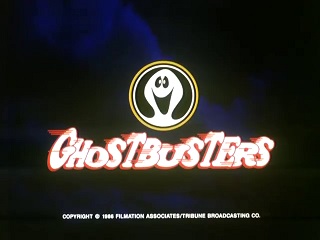
By fall 1986 the after-school cartoon strip had stopped exploding and settled into its full, mature form. The wall of toy cartoons was still there when a kid got home, but this season the new arrivals were companions to last year's hits rather than a fresh flood. SilverHawks joined ThunderCats from the same studio. Filmation put out a Ghostbusters that had nothing to do with the movie everyone knew. And Jem quietly held its place as the highest-rated syndicated cartoon on television.

After school in fall 1986 was a weekday first-run syndication strip, assembled market by market with no single national schedule. The season's new shows were SilverHawks and Filmation's Ghostbusters, running alongside returning hits Jem, ThunderCats, the Transformers, She-Ra, G.I. Joe, and M.A.S.K. The boom had plateaued: most of the block was now second and third seasons of established toy cartoons rather than brand-new launches.
A maturing block
The engine had not changed. Cartoons were still sold into first-run syndication, still stripped Monday through Friday, still assembled locally so the lineup differed by market. What shifted in 1986 was the balance. After two years of nonstop new toy launches, the afternoon was now carried mostly by shows in their second or third season. The strip was deep and dependable, but it was coasting on the catalog the previous two falls had built, with a smaller class of newcomers on top. That was a sign of a market filling up. Stations had a finite number of afternoon half-hours, the biggest toy properties already occupied most of them, and a new show now had to displace a proven one rather than fill an empty slot. The result was a block that felt settled: the same names in roughly the same order, week after week.
One thing this block was not: Nickelodeon. The cable channel ran its own national schedule of acquired and original shows and was never part of the station-by-station syndication economy described here, even though some viewers now remember all of it together as "afternoon cartoons."
The new and returning shows of fall 1986
| Show | Status in fall 1986 | Distributor or studio | Note |
|---|---|---|---|
| SilverHawks | New, September 8 to December 5, 1986 | Rankin and Bass; Lorimar-Telepictures | 65 episodes; a space companion to ThunderCats |
| Ghostbusters | New, September 8 to December 5, 1986 | Filmation and Tribune Entertainment | 65 episodes; Filmation's, not the movie tie-in |
| Jem | Returning series | Sunbow and Marvel | The number one syndicated cartoon that November |
| ThunderCats | Returning | Rankin and Bass | Still anchoring the action block |
| The Transformers | Returning, third season | Marvel and Sunbow | The toy line still driving the plot |
| M.A.S.K. | Final season, to November 26, 1986 | DiC | The ten-episode racing season |
| G.I. Joe | Final season of the Sunbow run, 1986 | Sunbow and Marvel | Winding down its original series |
SilverHawks came from Rankin and Bass, the studio behind ThunderCats and, before that, a long line of stop-motion holiday specials. It was distributed by Lorimar-Telepictures, ran 65 episodes from September 8 to December 5, 1986, and was built quite openly as a space-based equivalent of ThunderCats: a team given metal bodies and wings to fight organized crime in a far-future galaxy, drawn by the same overseas studio and voiced by many of the same actors. Slotting the two shows back to back gave a station an hour of matched action animation from one supplier. Jem, meanwhile, had grown from a set of weekly seven-minute shorts in the Super Sunday block into a full series in 1986 and was the number one Nielsen-rated syndicated cartoon that November, the rare toy cartoon of the era aimed squarely at girls and beating the boys' action shows in the ratings. M.A.S.K. and G.I. Joe both played out the ends of their original runs that fall, M.A.S.K. with a stripped-down ten-episode season that swapped crime-fighting for auto racing.
The naming tangle: two Ghostbusters
Filmation's Ghostbusters created one of the decade's great naming knots. When Columbia Pictures made the 1984 Ghostbusters film, it discovered Filmation already owned a live-action 1975 TV series called The Ghost Busters, and paid Filmation a reported six hundred and eight thousand dollars plus a share of profits to license the name. That deal did not include the right to make an animated series from the movie; when the film became a hit, Columbia handed the cartoon contract to DiC, which called its show The Real Ghostbusters to set it apart. Filmation then made its own animated Ghostbusters based on its 1975 sitcom instead. The two cartoons premiered within about five days of each other in September 1986, one in weekday syndication and one on ABC's Saturday morning, with nearly the same title and the same basic premise. Home-video releases of the Filmation show were relabeled Filmation's Ghostbusters just to keep buyers from confusing the two. Audiences were confused anyway, the Filmation show's toys sold poorly against the movie's, and producer Lou Scheimer later called it a mistake to have gone head to head with the more famous property. It is a clean illustration of how crowded the cartoon market had become by 1986: two studios could each back a show with the same name in the same season.
A representative big-market afternoon
As in prior years, there was no national grid to reproduce, only the typical shape. A representative big independent station ran its cartoons in half-hour blocks from roughly three o'clock to the early-evening news. In fall 1986 that block leaned on the established hits, ThunderCats, the Transformers, Jem, She-Ra, G.I. Joe, with SilverHawks or Filmation's Ghostbusters worked in wherever the station had cleared them. The order and start times still varied city to city. The feel was of a lineup that had found its final form and was running it out.
The debate around the block
Fall 1986 is also when the criticism of the whole model came to a head. The toy-driven cartoons had been called program-length commercials almost from the start, and by 1986 the argument was loud enough to reach the national press, with outlets openly debating the effects of toy-based television on children. The shows that filled the after-school strip were the exact targets: cartoons whose plots existed to introduce the next wave of figures and vehicles. Critics wanted them regulated as advertising, and the argument would run for years before the Children's Television Act set limits on program-length commercials in 1990. In fall 1986 none of that had bitten yet. The debate did not slow the block down. It just named out loud what the block had always been.
What changed from 1985
The flood became a catalog. Where 1985 brought a new category almost every month, 1986 mostly extended what already worked: a companion for ThunderCats, another studio's Ghostbusters, more seasons of the toy lines already on the shelf. Two of the biggest names, G.I. Joe and M.A.S.K., played out the end of their original runs that fall. The afternoon was as full as ever, but it was full of familiar faces, and the criticism that had trailed the format for years was now out in the open.
The honest bottom line
Fall 1986 was the toy-cartoon strip at cruising speed and under fire at the same time. The block was still two hours of merchandising, now openly discussed as such in the press, and the new shows were mostly variations on formulas that were already two years deep. There was nothing secret about what it was. And yet the afternoon still delivered, because the catalog it was coasting on was genuinely good, and a kid tuning in at three did not care that Jem was a doll or that SilverHawks existed to sell figures. The shows were there, every day, and that was the whole deal.
Sources
- Wikipedia, "SilverHawks", for the September 8 to December 5, 1986 first-run syndication run, the 65 episodes, the Rankin and Bass development, the Lorimar-Telepictures distribution, and the ThunderCats companion design and shared voice cast.
- Wikipedia, "Ghostbusters (1986 TV series)", for the Filmation and Tribune Entertainment production, the September 8 to December 5, 1986 daytime syndication run of 65 episodes, the sequel relationship to Filmation's 1975 The Ghost Busters, the roughly six hundred and eight thousand dollar name license Columbia paid Filmation, the DiC contract for The Real Ghostbusters, the premieres about five days apart, and Lou Scheimer's later assessment.
- Wikipedia, "Jem (TV series)", for Jem beginning as weekly shorts in the Super Sunday block in 1985, becoming a standalone series in 1986, and being the number one Nielsen-rated syndicated cartoon in November 1986.
- Wikipedia, "The Real Ghostbusters", for the DiC production and the 1986 ABC premiere alongside the syndicated Filmation show.
- Wikipedia, "History of Nickelodeon", for Nickelodeon running its own national cable schedule, separate from the station-by-station syndication economy this page describes.
- Wikipedia article infoboxes for the other syndicated series named on this page (first-run syndication dates, distributor, production company and episode counts), saved verbatim at gate time and checked field by field. The toy-based-TV debate reaching national press is anchored to the New York Times feature "Toy-Based TV: Effects on Children Debated" (February 3, 1986), cited in the ThunderCats article.
- Method note, stated plainly: after-school television was weekday first-run syndication, not a single national network grid. Independent, UHF and network-affiliate stations each assembled their own weekday afternoon strip from what was in distribution, so order and times varied by market. This page therefore presents a verified roster of the series in distribution that season plus a representative big-market afternoon shape described in prose. No specific station's timed grid is claimed as sourced fact. Reliable per-market listings archives were not accessible when this page was built.
Part of the Saturday morning 80s time-capsule series, which also tracks the weekday syndication strip. Previous year: After School in Fall 1985. Next year: After School in Fall 1987. See also the network side that same season: Saturday Morning Fall 1986, and the cable channel that ran on its own clock: Nickelodeon in the 80s.
This whole schedule still runs somewhere, the somewhere is here.
Frequently asked
What cartoons were on after school in 1986?
Weekday afternoons in fall 1986 were filled with first-run syndicated cartoons: the new SilverHawks and Filmation's Ghostbusters, alongside returning hits Jem, ThunderCats, the Transformers, She-Ra, G.I. Joe, and M.A.S.K. The exact lineup depended on the station and market.
Was the 1986 Ghostbusters cartoon the same as the Real Ghostbusters?
No. Filmation's Ghostbusters, which premiered in syndication on September 8, 1986, was based on Filmation's own 1975 live-action series, not on the 1984 movie. The movie's cartoon aired separately on ABC as the Real Ghostbusters, made by DiC. The two premiered about five days apart.
What was SilverHawks?
SilverHawks was a space-themed action cartoon from Rankin and Bass, the studio behind ThunderCats, distributed by Lorimar-Telepictures. It premiered in first-run syndication on September 8, 1986, ran 65 episodes through December 5, and was designed to run alongside ThunderCats in the weekday action block.
Was Jem popular in 1986?
Yes. Jem was the number one Nielsen-rated syndicated cartoon series in November 1986, having grown from a set of animated shorts in the Super Sunday block into a full weekday series.
Why were 80s cartoons called program-length commercials?
Critics used the term because many syndicated cartoons were built around toy lines, with plots that introduced new figures and vehicles for kids to want. By 1986 that criticism had reached the national press as a public debate over toy-based television.