80s Kids TV · The Shows, the Schedules and the World Around Them

A kid in 1985 had three places to find a cartoon and a finite amount of time to be in front of each one. There was Saturday morning, there was the hour after school, and if the house had cable there was the evening block. Everything else, the guide on the coffee table, the VCR that could hold a show for later, the station that shut itself off at night, was the machinery that made those three windows work. This is the top of the site.
The cartoons of the 80s lived in three separate places. Saturday morning belonged to ABC, CBS and NBC, who each ran a four-hour block refreshed every fall. Weekday afternoons belonged to first-run syndication, which is where Transformers, ThunderCats, He-Man, Jem and DuckTales actually aired. Cable ran its own daily blocks, led by the USA Cartoon Express from 1982. Nickelodeon, meanwhile, barely ran cartoons at all.
Where the cartoons actually were
The single most common mistake in remembering 80s cartoons is collapsing all of them into Saturday morning. The biggest shows of the decade were not on Saturday morning. They were on at three in the afternoon, five days a week, sold directly to local stations.
Saturday morning in the 80s is the complete schedule archive: ten fall seasons documented network by network, the five-year after-school syndication strip, the cable blocks, and the holiday nights. If you want to know what was on and when, that is the surface for it.
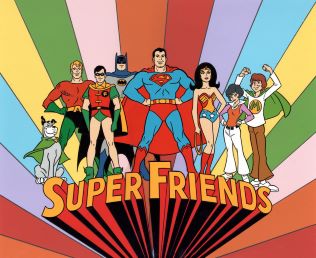
The four ways into this site
- Saturday morning in the 80s collects every schedule capsule, season by season and daypart by daypart: the ten fall years on ABC, CBS and NBC, the after-school syndication strip, and the cable blocks including the USA Cartoon Express at both its founding and its late-decade peak.
- The full story collects 48 making-of accounts, told through what the creators, producers and cast have said about their own work across decades.
- Nickelodeon in the 80s covers the cable channel before the empire, when it ran a Canadian sketch show and a British cartoon because that was what it could afford.
- The dance shows of the 80s covers Solid Gold, Club MTV, Puttin' on the Hits, American Bandstand and the daily cable show this site keeps a full archive on.
Two anthology strands sit outside those four paths but inside the same shelf below, both institutions that closed out a Saturday morning rather than opening one: a storybook slot that ran two decades and a Library of Congress-linked cartoon strand hosted by Captain Kangaroo's Bob Keeshan.
The world around the set
The programs are only half of it. The other half is the equipment and the habits that decided how anyone actually watched, and each of these has its own page.
- The Saturday morning ritual, why an entire week's supply of cartoons arrived in one window, and how breakfast ended up permanently attached to the memory.
- Taping it off the TV, home recording as a federal court case, decided 5 to 4 in 1984, with Fred Rogers testifying for the VCR makers.
- TV Guide in the 80s, the object that made planning a week possible, printed in 140 local editions.
- When TV went to bed, the sign-off as a scheduled event, back when a broadcast day had an end.
- The UHF dial, the worse half of the dial, and why the cheap, weird and wonderful television ended up living there.
- The summer of reruns, and the production arithmetic that made three months of repeats inevitable.
- TV theme songs, the last decade of the minute-long main title, written to order by composers carrying ten shows at a time.
- The ABC Afterschool Special, the anthology that dramatized real kids' problems for twenty-five years on a house rule: no adult solves it for them.
- The ABC Weekend Special, the storybook slot that closed the Saturday cartoon block with a real book, decade in and decade out.
- CBS Storybreak, the Saturday cartoon that animated real children's novels, hosted by Captain Kangaroo's Bob Keeshan with the Library of Congress picking the follow-up reading.
The honest bottom line
The children's television of the 1980s was an advertising delivery system, and it is not a slander to say so, because the people who built it say so. Saturday morning was concentrated into one block because that was efficient to sell. The after-school strip existed to move toys on a sixty-five-episode cycle. The cable blocks were assembled from licensed libraries because licensed libraries were cheap. Even the guide on the coffee table sold programs to the reader on the page that told them when the programs aired.
What that system produced, more or less by accident, was a set of fixed appointments that an entire country's children kept at the same time. Scarcity did that, and scarcity is gone. The shows themselves are all available now, permanently, on demand, which is better in every measurable way and has not reproduced the feeling even slightly. That gap is what most of this site is actually about.
The full making-of index is at the full story. The complete schedule archive is at Saturday morning in the 80s.
Sources
- This is an index page. It makes no factual claim of its own: every show, date, network and episode figure named here is carried from the individual page it links to, and each of those pages carries its own sourcing. Nothing on this page is asserted that is not already sourced downstream.
And when the reading is done, the watching starts, pull up a cushion in the room.
Frequently asked
What cartoons were on in the 80s?
Depending on the daypart: Saturday morning ran network blocks built around properties like the Smurfs, Muppet Babies and the Real Ghostbusters, while weekday afternoons carried the syndicated toy cartoons, Transformers, He-Man, ThunderCats, Voltron, G.I. Joe and Jem. The complete lineups by season are in the schedule archive.
What TV shows did kids watch in the 80s?
Not only cartoons. The decade's kids TV also included live-action sitcoms like Punky Brewster, Small Wonder and Charles in Charge, game shows like Double Dare and Fun House, public television like Reading Rainbow, and the dance and music shows that ran after school and at weekends.
What time were cartoons on in the 80s?
The network Saturday block ran through the morning, the syndicated strip ran in the late afternoon on weekdays, and cable blocks ran in the early evening. Exact running orders differ by season and are documented individually in the schedule capsules.
Were Nickelodeon and cartoons the same thing in the 80s?
No, and this is the most common misremembering on the site. In the 80s Nickelodeon ran acquired live-action programming and a very small number of cartoons, and did not make animation of its own until the following decade.
Why does 80s kids TV feel so different from now?
Because it was scarce and scheduled. A show existed at one time on one channel, and missing it meant missing it. Almost every difference people notice traces back to that one structural fact rather than to the shows themselves.
Where should I start?
If you remember a specific show, start with the full story. If you remember a specific morning, start with Saturday morning in the 80s.