The Cast of You Can't Do That on Television: The Show-Era Guide
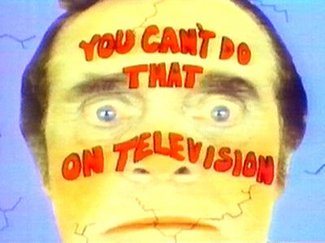
The cast was recruited by an announcement over a junior high school public address system. Two adults played every grown-up who ever appeared on the show, across ten seasons and more than a hundred kids. And one performer got her lifelong television nickname because a classmate thought she was short, while another got hers because she was late to a read-through for talking in class.
You Can't Do That on Television was carried by two adult actors, Les Lye and Abby Hagyard, plus a rotating cast of more than 100 Ottawa kids between 1979 and 1990. Christine McGlade hosted from the first episode until partway through 1986, when Alasdair Gillis took over. Lye appeared in every episode of the run. Ruth Buzzi appeared in the 1979 season, and Alanis Morissette appeared in five 1986 episodes.
This page covers the cast as the show itself documented them: who played what, when they were there, and how they got there. It is a show-era guide and deliberately stops at the edge of the studio. For where the show sat on the channel that carried it to America, see Nickelodeon in the 80s, which covers the network's decade from acquired programming to its first original hits.
The two adults who played every grown-up
The show's central joke was that adults were the problem, and almost all of them were played by the same man.
Les Lye, born Leslie Ernest Lye in Toronto on November 18, 1924, was a veteran Ottawa radio and television performer long before the show existed. He had been at CJOH since 1961 and had co-hosted the syndicated children's show Uncle Willy & Floyd with Bill Luxton for over two decades. On You Can't Do That on Television he played essentially the entire adult male population: Ross Ewich the stage director, Barth Bagge of Barth's Burgery, Lance Prevert the children's father, Blip the arcade owner, Snake Eyes the bus driver, the dungeon master, El Capitano of the firing squad, the doctor, the teacher, the principal, the coach, and the announcer. He was the only cast member to appear across the entire series run.
Christine McGlade, who worked alongside him from the first episode, described him without sentiment in a 2015 interview: "Les had his own kids at home and was not a father figure on set. He was a colleague, always treating the kids like partners, collaborators, and fellow actors, never as children. He was hilarious, and incredibly talented. We had fun."
Abby Hagyard, born in Edmonton and trained in drama at St. Patrick's College in Ottawa, joined in 1982 and played the Mom along with every other adult female character. The record credits her with 113 episodes between 1982 and 1990. On the show's compressed format, "With 30-second sketches, there's no room for filler," she told The Hollywood Reporter in 2024.
McGlade's own account of the adult roster is blunt: "There were only two adult actors on the show. Abby Hagyard often played the Mom and any other female characters."
There was a third, earlier one. Ruth Buzzi, already well known in the United States from Rowan & Martin's Laugh-In, appeared in the 1979 local season and played adult female characters before Hagyard's arrival, and she carried through the spinoff Whatever Turns You On. Counting her, three adults appeared on the show across its whole history, which is how the New York Times framed it in its 2009 obituary of Lye. Counting any single season from 1982 onward, the answer is two. Both statements circulate and both are correct, depending on the window.
Lye died in Ottawa on July 21, 2009, at 84. Buzzi died in 2025 at 88.
How a kid got on the show
The casting method is documented from two directions, by a maker and by a performer, and the two accounts corroborate each other on process while disagreeing sharply on tone.
Co-creator Geoffrey Darby described the pipeline to Vulture in 2012: "They were cast through the local schools and 'cattle calls.' And then people were chosen, then they were put into acting class, and then they were put on the show. But not everyone made it onto the show." He remembered supply as no obstacle at all: "There were lots of kids who wanted to do the show, so it wasn't that difficult."
The deliberate design was that the kids stay ordinary. Darby put it this way: "They all went to regular school and were in regular classes. They would come after school for the table readings and then would work on the weekends. They stayed regular, local kids, because we didn't want them in a bubble. Because then they're no longer kids, they're 'act-ores.' Which is never what was wanted."
McGlade's account of the same pipeline, from the inside, matches the mechanics exactly. She described it in 2015: "Roger Price, the producer of the show, came to my junior high school [in 1978]. There was an announcement over the PA system saying that kids who wanted to try out for a TV show should go to the English class after school." She had gone only to support a friend who was more interested than she was.
Then the tone diverges. Where Darby remembered a natural search for regular kids, McGlade remembered a selection on physical criteria: "I learned later that Roger chose me to come to the auditions because I was small for my age, had clear skin, and good teeth: kind of like picking horses. I think he also favored kids who were articulate and maybe a little bit precocious."
Both can be true at once, and the page will not flatten them. The show did recruit ordinary local kids rather than trained child actors, and the ordinary local kids were still screened the way a producer screens talent.
The workload landed on top of full-time school. McGlade described the week: "We would usually take the bus from school out to CJOH every day for drama lessons in the beginning of the week, then for read-throughs on Wednesdays and Thursdays, then shooting all weekend including Friday after school." Darby, asked about compensation, said only: "The kids got paid. They got paid a lot of money." Slimings and waterings carried a separate bonus on top, $50 and $25, a figure McGlade and the show's makers have given consistently for decades.
Parents mostly stayed out of it. Darby said: "There was one diva parent and that kid was then fired."
The personas were the kids, amplified
The reason the cast reads as a set of vivid characters rather than a list of names is that the writers built the personas out of the performers' actual lives.
Darby gave Vulture the clearest example. Lisa Ruddy, a cast member from the first episode in 1979 through 1985, "was late for a table reading one evening because she got a detention for talking in class. We took that and turned her into 'Motormouth' Ruddy." His summary of the method: "We basically took what their real lives were and just amped it."
McGlade's own nickname worked the same way. "Moose" was not invented for television. "A school mate named Danny Burns started calling me 'Moose' when I was nine, because I was so short," she said in 2015. Price heard it and wrote it into the show, and millions of viewers learned it as her name.
Here the record drifts, and the drift is worth naming rather than smoothing. A widely circulated version of the nickname's origin traces it to the character Moose Mason in the Archie comics, sourced to a fan site and to a since-flagged passage. McGlade's own 2015 telling gives a different and simpler reason, her height, and names the classmate. Her firsthand account is the stronger evidence, and the Archie version should be treated as the weaker one until a maker or performer says otherwise on the record.
The collaborative construction went into the credits. As Darby put it, the writing credit at the end of each episode named the writers "and 'the cast and crew.' Because we wanted to give credit for what we made up on the set, which was a lot."
The hosts, as far as the record supports
Christine McGlade, born August 25, 1963, was the show's original host and its longest-serving kid performer. She was there from the first episode on February 3, 1979 and hosted through part of the 1986 season, at which point she was the last of the original cast still present apart from Lye. Alasdair Gillis, a cast member from 1982, co-hosted alongside her in 1985 and 1986 and served as primary host through the end of the 1986 season.
McGlade gave a plain reason for leaving: "I was 23, much too old to be playing a kid! It was time." She had described the same problem while still on the show, explaining why she appeared more on the main set than in sketches: "I think it's also because I was older than the other kids so it started to seem odd for me to be playing a kid, for example, in the classroom or living room."
Beyond that point the honest answer is that the host succession for the 1987 to 1990 seasons is not well documented in sources that meet a citation standard. Names for a third and fourth host circulate widely, but they trace to fan compilations and user-editable databases rather than to press coverage, the makers, or the performers themselves. This page names what the record supports and stops there.
The cast members the show sent onward
The show is frequently described as a launching pad, and three names carry that reputation in the documented record.
Alanis Morissette appeared in five episodes during the 1986 season and, according to The Hollywood Reporter's 2024 anniversary piece, "impressed castmates by playing her demo tape." That is the entirety of what this page has to say about her, by design.
Bill Prady came out of the show's writing ranks and later co-created The Big Bang Theory. Filmmaker Patrick Mills is also credited among its alumni. Adam Greydon Reid joined the cast at age 11 after writing a letter to Price and went on to write episodes with him as a teenager, which makes him one of the few people who was both a kid on camera and a credited writer on the same show. Reid gave The Hollywood Reporter the line that most directly contradicts Darby's memory of a cast that hated the goo: "It was an honor to be slimed."
Every other performer named in the cast record was a local Ottawa kid who did a season or two of television and then went on with a private life. What they did afterward is their own business and is not the subject of this page.
How the cast record has been assembled, and where it drifts
- 1979 to 1990, the credits. The primary record is the show itself. Each episode credited its writers plus "the cast and crew," which is generous in spirit and imprecise as documentation, since it does not attach individual kids to individual sketches.
- 2004, the documentary. You Can't Do That on Film, directed by David Dillehunt and filmed in August 2004, brought makers and cast back to Studio D at CJOH. The tour was the last production made in that studio, which was demolished in 2011 after a fire the previous year. It was released by Shout! Factory in 2012 and reissued in 2022.
- 2012, Vulture. Mathew Klickstein's interview with Geoffrey Darby put the casting pipeline, the "Motormouth" origin, and the amplification method on the record from a maker for the first time.
- 2015, Kickin' It Old School. McGlade's interview, republished by Rediscover the '80s in 2017, is the deepest first-person cast account available: the PA announcement, the horse-picking line, the weekly schedule, the sliming rates, and her reason for leaving.
- 2024, The Hollywood Reporter. The 45th anniversary piece added Hagyard and Adam Greydon Reid speaking for the cast, and confirmed the five-episode Morissette figure independently of the episode listings.
Two cautions belong on the record. First, the most detailed cast listings in general circulation, including per-episode first and last appearances and a great deal of trivia about individual kids, come from fan compilations. The main encyclopedia article on the show currently carries maintenance flags for citation quality and unreliable sourcing, and its cast table is almost entirely uncited. Those listings are often right and are not verifiable, which is a different thing. This page uses them for nothing.
Second, the episode totals do not fully reconcile. The show is generally recorded as 143 episodes across ten seasons, with two additional compilations, while per-performer tallies elsewhere in the same record credit Lye with 144. The difference is small and unresolved, and the safe statement is the one every source agrees on: Lye was in all of them.
The honest bottom line
The cast of You Can't Do That on Television was a rotating group of amateur Ottawa schoolkids, recruited partly for having good teeth, working weekends around homework, playing characters assembled out of their own detentions and nicknames, and backed by two adults doing the work of an entire ensemble. Nobody involved was building a career on purpose, and most did not get one out of it. What they made instead was a decade of television that a fledgling cable network borrowed its entire personality from, and the fact that the record of who did what is patchy and fan-assembled is itself a reflection of how little anyone expected it to matter.
Sources
- Vulture, "So You Think You Can't Do That on Television?", Mathew Klickstein interview with Geoffrey Darby, 2012.
- Kickin' It Old School, interview with Christine McGlade, 2015 (republished by Rediscover the '80s, 2017).
- The Hollywood Reporter, "'You Can't Do That on Television' and the Slime Boosted Ratings", Ryan Gajewski, 2024.
- CBC News, "Les Lye, actor and broadcaster, dies", July 22, 2009. Carries Lye's birth date (November 18, 1924, Toronto), his career record and the ten-season run. Read in full. The New York Times obituary of the same week ("Les Lye, Canadian TV Comic, Dies at 84", 2009) reports the same facts; nytimes.com is not reachable from here and is named but not linked.
- CTV Ottawa, "Ottawa legend Les Lye passes away", July 22, 2009. Named as the local broadcaster's obituary of record; not read directly and therefore not linked.
- Los Angeles Times, "Ruth Buzzi dead: 'Laugh-In,' 'Sesame Street' veteran was 88", May 2, 2025.
- Wikipedia, "You Can't Do That on Television", "Les Lye", "Abby Hagyard", "Christine McGlade", "Ruth Buzzi" (run dates, episode counts, and career records, cross-checked; the show article's uncited cast table was deliberately not used).
Nobody gets slimed for just sitting down to watch. More show stories live at /full-story/. Related: the full story of You Can't Do That on Television and the complete history of Nickelodeon slime.
Frequently asked
Who was in the cast of You Can't Do That on Television?
Two adults carried the show: Les Lye, who played every adult male character and appeared in every episode, and Abby Hagyard, who joined in 1982 and played the Mom and other adult women. Ruth Buzzi appeared in the 1979 season. More than 100 kids passed through the cast between 1979 and 1990, hosted first by Christine McGlade and then by Alasdair Gillis.
Who hosted You Can't Do That on Television?
Christine McGlade, nicknamed "Moose", hosted from the first episode in February 1979 until partway through the 1986 season. Alasdair Gillis co-hosted with her in 1985 and 1986 and then hosted through the end of the 1986 season. Host attributions for the 1987 to 1990 seasons circulate widely but are not supported by citable sources.
Was Alanis Morissette on You Can't Do That on Television?
Yes. She appeared in five episodes during the 1986 season. The Hollywood Reporter's 2024 anniversary piece reports that she impressed castmates by playing her demo tape.
How did kids get cast on the show?
Through local Ottawa schools and open calls. Co-creator Geoffrey Darby said candidates were chosen, put into acting class, and then put on the show, and that not everyone made it. Christine McGlade was recruited by an announcement over her junior high public address system in 1978 and went to the audition to support a friend.
How many adults were on You Can't Do That on Television?
Three across the entire run: Les Lye, Abby Hagyard from 1982, and Ruth Buzzi in 1979. In any given season from 1982 onward there were two, which is why both numbers appear in different accounts.
Did the cast get paid extra for being slimed?
Yes. Christine McGlade has said the cast received $50 extra for a sliming and $25 for a watering, on top of regular pay. Darby confirmed the bonus and said only that the kids "got paid a lot of money."