Green Slime · The Complete History of Nickelodeon's Signature Goo
An entire television network built its identity on a bucket of goo that began as a can of green latex paint left to rot in the corner of a studio. There has never been one recipe for it. The man who invented it asked a reporter not to print the ingredients, and the man who made it famous cheerfully listed his out loud. This is the story of the most recognizable slop in television.
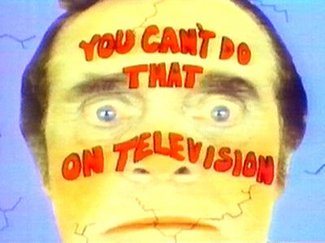
Nickelodeon's green slime made its debut on You Can't Do That on Television, the Canadian sketch show that launched in 1979, and grew into the network's trademark. It never had a single fixed recipe. Early batches were green Jell-O thinned with flour, later a cream-of-wheat cereal dyed with food coloring and softened with baby shampoo, while Double Dare used vanilla pudding, applesauce, and oatmeal. From one Canadian sketch show, the goo spread to Double Dare, the Kids' Choice Awards, and the Nickelodeon Studios tour, becoming shorthand for the whole network.
The goo that became a logo
Slime is the one thing every Nickelodeon viewer of the last forty years can describe from memory: bright green, thick, cold, dumped from above. It outlasted the shows that made it. As Mental Floss summarized in 2012, the slime "made its first appearance on You Can't Do That on Television, the Canadian-made sketch comedy show that ran from 1979 to 1990," and "from there, it became a staple of almost everything the network did, with regular slimings on many programs, at the Kids' Choice Awards and at the Nickelodeon Studios attraction at Universal Studios Florida."
That is a rare arc for a prop. Most set dressing dies with its show. Slime became a brand, and a network that was fighting for cable carriage in the early 1980s discovered it had a mascot that cost a few dollars a bucket.
It started as a can of paint
The invention story belongs to You Can't Do That on Television, and it is told in full on its own page. The short version, from the crew who were there, is that nobody set out to invent anything. A propmaster named Paul Copping was handed a rundown that called for "this kinda disgusting slimy green stuff," with no explanation of what it was for, according to crew member Bill Buchanan in his 2012 Mental Floss account. Copping mixed a garbage can full of it, colored with green latex paint, and it sat festering in the studio while people gave it a wide berth. The first true slime was, in other words, closer to house paint and rot than to anything edible.
That is exactly why it could not stay that way. The gag worked, the network wanted more of it, and paint that fouls in a corner is not something you can safely pour on a child twice a week. The recipe had to change, and it kept changing for the rest of the substance's life.
The recipe nobody can pin down
Here is the single most important fact about Nickelodeon slime, and the one that trips up every "what is it made of" answer online: there is no one recipe, and there never was. The formula changed by era, by show, and by whatever the crew could buy in bulk that week.
The first safe batch, meant to be dumped on people without hurting their eyes or mouths, was mostly green Jell-O set in a fridge, then pulled out early to liquefy and stirred with flour, per Mental Floss. That version took too long to prepare and turned lumpy if rushed, so the crew switched to a cream-of-wheat cereal they could mix cold on the spot and dye with green food coloring. That batch dried pasty and would not wash out of hair, so they added a couple of drops of baby shampoo and learned to stop tape the instant a sliming was over so the cast could sprint to the showers. Other shows drifted further: Mental Floss noted that "cottage cheese and vegetable oil are sometimes mentioned as ingredients," a hedge that tells you how loose the record is.
By the Double Dare era the recipe had moved to the dessert aisle. Host Marc Summers explained that most of the slime used on his shows was made of "vanilla pudding, applesauce, oatmeal, green food coloring, and by the third day, anything else that was on the obstacle course," as quoted by Mental Floss.
The most telling thing is not any single ingredient list but who was willing to share one. When Vulture interviewed You Can't Do That on Television co-creator Geoffrey Darby in 2012, the interviewer noted that Darby asked him not to reveal the ingredients of slime, confirming only that it was all edible and non-toxic. A few years and one network later, Summers was reciting his recipe for a magazine. The goo went from guarded trade secret to published party trick in the space of a decade.
From one sketch to the whole network
Slime traveled the way the network did. On Double Dare, which premiered in 1986, whole obstacles were engineered around dispensing the goo. When Nickelodeon launched the Kids' Choice Awards, whose first ceremony was held March 28, 1987, the green goo became the show's signature threat and reward: the trophy is a hollow orange blimp handed out since 1990, but the moment audiences wait for is a celebrity getting drenched. Wikipedia's record notes the network has "been known to cover people with the network's trademark green slime," and that since 2002 slime stunts have been a built-in part of the ceremony. The Nickelodeon Studios attraction at Universal Studios Florida turned sliming into a tourist experience, and decades later the network still runs slime-themed live events. The network's own path through the decade, from borrowed shows to the Double Dare era, is on Nickelodeon in the 80s.
None of that required a better recipe. It required a recognizable color and a reliable way to dump it. The substance that started as a rotting can of paint had become a piece of intellectual property.
How the recipe got pieced together
- 1979 to 1990. The slime is invented and constantly reformulated on You Can't Do That on Television, but almost none of it is documented at the time. The recipes live in the crew's memory, not on paper.
- 1986 onward. Double Dare gives the goo a second home and a new formula built for volume and mess, and Marc Summers begins describing his version in interviews across the following decades.
- 2012, Mental Floss. Matt Soniak's account, drawing on crew members Bill Buchanan and Paul Copping, lays out the full evolution for the first time: latex paint, then Jell-O and flour, then cream of wheat and baby shampoo, plus Summers' pudding-based Double Dare mix.
- 2012, Vulture. Mathew Klickstein's Darby interview establishes the opposite instinct, a co-creator who guarded the recipe as a secret even as he confirmed it was harmless.
- 2013 onward, Slimed! and the anniversary oral histories. Klickstein's book and later retrospectives consolidate the crew tellings, but they inherit the same problem: the accounts do not fully agree.
The drift is the whole point. Depending on which telling you read, Nickelodeon slime is green latex paint, or liquefied Jell-O and flour, or cream of wheat, or cottage cheese and oil, or vanilla pudding and applesauce. All of these are true, of different batches, in different years, on different shows. Anyone who tells you the recipe is telling you one recipe. There were dozens.
The honest bottom line
Nickelodeon slime is not a formula. It is a color and a gesture. The first real batch was closer to spoiled paint than food, the versions that followed were chosen for how cheap and washable they were rather than how they looked, and the ingredient lists conflict because the crews were improvising with whatever was in the building. That is also why it worked. A network with almost no money found an image it could reproduce for a few dollars, pour on anyone, and never trademark away, and that green splat has outlived nearly every show that ever used it.
Sources
- Mental Floss, "How Did Nickelodeon Make Green Slime?", Matt Soniak, 2012 (crew accounts from Bill Buchanan and Paul Copping, and the Marc Summers recipe).
- Vulture, "So You Think You Can't Do That on Television?", Mathew Klickstein interview with Geoffrey Darby, 2012.
- Wikipedia, "Kids' Choice Awards" (first ceremony date, trophy history, and the slime-stunt record, cross-checked).
The slime flows freely in the room where the shows play. More show stories live at /full-story/. Related: the full story of You Can't Do That on Television and the full story of Double Dare.
Frequently asked
What is Nickelodeon slime made of?
There is no single recipe. Over the years it has been green Jell-O and flour, a cream-of-wheat cereal with green food coloring and a little baby shampoo, and, on Double Dare, vanilla pudding, applesauce, oatmeal, and green food coloring. The very first batch on You Can't Do That on Television was colored with green latex paint and was not meant to be edible.
Where did Nickelodeon slime come from?
It was invented by accident on the Canadian sketch show You Can't Do That on Television, which ran from 1979 to 1990. A propmaster was asked to make "disgusting slimy green stuff" for a sketch with no further instructions, and the gag was such a hit that the network built an identity around it.
Is Nickelodeon slime edible?
The versions dumped on people were made to be safe if they got in the eyes or mouth, and co-creator Geoffrey Darby confirmed the slime was edible and non-toxic, though he declined to give the ingredients. The very first batch, colored with latex paint, was not.
When did celebrities start getting slimed at the Kids' Choice Awards?
The Kids' Choice Awards began with a ceremony on March 28, 1987, and green slime became its signature stunt. Sliming was formalized as a recurring part of the show starting in 2002.
Why does every recipe for Nickelodeon slime seem different?
Because they all are. The formula changed by era, by show, and by budget, and the crews mixed it from whatever they could buy in bulk. Every accurate account describes a real batch, just not the same one.