Saturday Morning in the 80s · The Complete Cartoon Time Machine
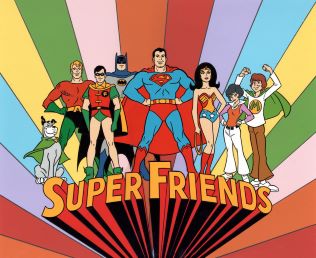
There is a version of the 1980s that exists only between 8:00 and noon on a Saturday. It has a running order, it changes every September, and for one decade it was the same in every house in the country that owned a television. This page is the index to all of it: every season, hour by hour, plus the afternoons and the cable blocks that filled in the rest of the week.
Saturday morning cartoons in the 80s were a four-hour block that ABC, CBS and NBC each programmed separately, refreshed every fall, and aimed entirely at children. The lineups changed season by season, from the recycled libraries of 1980 through the toy-cartoon boom that peaked around 1986 to the live-action turn of 1989. Each season below is documented as its own complete grid, network by network and half-hour by half-hour.
The ten seasons, in order
Each capsule below is one fall season, with the full lineup for all three networks and what changed from the year before. They are built to be read as a run, because the interesting thing about the decade is not any single morning. It is the drift from one September to the next. One fixture sits in every one of the ten ABC grids without ever being new: the ABC Weekend Special, the book-adaptation anthology that closed the network's cartoon block each fall.
- Fall 1980 opens the decade on recycled material: reruns in two NBC slots, sitcom characters resold as cartoons on ABC, and a CBS lineup leaning on properties that were already decades old.
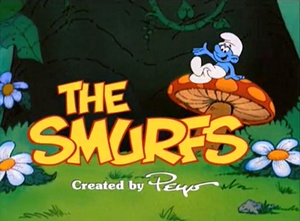
- Fall 1981 is the season one show breaks out. Most of the schedule is the same library moved around the board, and then the Smurfs arrive and pull the whole medium toward soft, merchandise-friendly worlds.
- Fall 1982 is the arcade season, the fall Pac-Man makes the jump from the coin slot to the couch while the Smurfs take the middle of the morning.
- Fall 1983 is where the morning becomes a catalog. Video-game tie-ins, a Rubik's Cube show, plush-toy cartoons, and a series built on a movie star's tough-guy image, with the rules against program-length commercials still loose enough to drive through.
- Fall 1984 holds both truths at once: mostly tie-ins and clones, and also Muppet Babies, which was smart and warm and genuinely well made.
- Fall 1985 is the season Disney arrives and raises the floor. Everything still had a toy line waiting, and the craft climbed anyway.
- Fall 1986 is the season most people miss most, when the borrowing had gotten good: the Real Ghostbusters as a genuinely strong adaptation, and Pee-wee's Playhouse proving a network would still gamble on something strange.
- Fall 1987 runs the same machine on odder products, a plush monster and a card-gum gross-out and a sitcom alien, with Bakshi's Mighty Mouse smuggling real animation onto the schedule.
- Fall 1988 is where the formula shows its age. The Smurfs shrinking is the tell, and Garfield arriving is the compensation.
- Fall 1989 is the machine winding down, with the freshest energy in live action and Saved by the Bell pointing at what the institution would become.
The same mornings, cut by network
The seasons above read the decade September by September. These pages read it one network at a time, each block's whole arc across the ten falls.
- ABC Saturday morning cartoons, the network of Scooby-Doo in a new coat nearly every season, a superhero anchor five names deep, and American Bandstand's slow exit.
- NBC Saturday morning cartoons, nine straight years of the Smurfs, and the network that ended the decade by building Saved by the Bell to replace the format.
- CBS Saturday morning cartoons, the library network that rebuilt itself around Muppet Babies and reached for it again whenever the schedule broke.
The other half of the week: the after school strip
Saturday was the network block. The weekday afternoons belonged to first-run syndication, which is a different business with different economics, and for a few years it carried more of the shows people actually remember.
- Fall 1984 is the strip taking shape behind He-Man, with Transformers, Voltron and GoBots arriving and the sixty-five-episode batch becoming the unit of production.
- Fall 1985 is the peak: She-Ra, ThunderCats, M.A.S.K., Robotech and a daily G.I. Joe stacked back to back.
- Fall 1986 is the plateau, the block at cruising speed and openly discussed in the press as merchandising.
- Fall 1987 is the hinge, the year DuckTales showed the same daily slot could hold something built on craft instead of a toy aisle.
- Fall 1988 is the wind-down, with the flagships finishing their runs and movie spinoffs filling the gaps.
What cable did to the shape of the week
The whole premise of Saturday morning was scarcity. Cable is what eventually dismantled it, by making cartoons an every-day thing instead of a once-a-week event.
- The USA Cartoon Express in 1985 covers the founding-era block, cable's first attempt at a permanent daily cartoon fixture, built on a licensed Hanna-Barbera library.
- The USA Cartoon Express in 1988 is the same block after it stopped being a rerun channel and became a real daily slate.
- A cable kid's day in 1986 reconstructs one documented Tuesday across Nickelodeon, USA and Disney, which is the closest thing the record offers to what cable actually felt like before the nostalgia set in.
- Before school in 1986 covers the weakest daypart in children's programming and why the networks had given up on it.
The nights that were events
Two capsules cover the dates the schedule treated differently, when the block broke pattern and the whole house watched.
- Halloween night 1986, a Friday, with the kids' channels mostly running their normal shows and two local stations running horror movies because horror movies were cheap.
- Christmas specials, December 1987, the three premieres and the perennials, and why the month felt wall to wall.
The ritual around the morning
The lineups are one thing. What a household actually did with them is another, and it has its own page: the Saturday morning ritual covers why the whole week's supply of cartoons arrived in a single window, what time the networks actually opened, and how breakfast cereal ended up permanently attached to the memory. This hub stays with the schedules. That page has the morning itself.
The honest bottom line
Read ten seasons back to back and the sentimental version does not survive. The morning was a sales floor for most of the decade, the shows were built to move product, and a striking share of what aired in any given fall was a library title, a licensed property, or a clone of something that worked the year before. The networks concentrated children's programming into one block because it was efficient to sell, not because Saturday was special.
What the run also shows is that the format was the gift, independent of what filled it. Four hours of programming aimed squarely at one audience, on every channel, one morning a week, is a thing television built and then stopped building. The shows were disposable. The appointment was not, and the appointment is what people are actually remembering.
Sources
- This is an index page. It makes no factual claim of its own: every show, date, network and episode figure named here is carried from the individual page it links to, and each of those pages carries its own sourcing. Nothing on this page is asserted that is not already sourced downstream.
Part of 80s kids TV. The stories behind these shows, told by the people who made them, are indexed at the full story. BobbyAndJason.com covers the ritual in 80s Saturday Morning Cartoons: The Best Ritual of the Decade.
Saturday morning is a state of mind, the room keeps it stocked.
Frequently asked
What cartoons came on Saturday morning in the 80s?
It depends entirely on the season, which is why this hub is organised by year. Fall 1980 ran largely on recycled and licensed material, fall 1983 through 1987 ran on toy and movie properties, and fall 1989 was already turning toward live action. Each season capsule above carries the complete lineup for all three networks.
What time did Saturday morning cartoons come on?
The networks programmed the block through the morning, with the schedule refreshed each fall. The exact opening time and running order for any given season is in that season's capsule, which is decoded from the archival per-season schedule records rather than from memory.
Which year was the best for Saturday morning cartoons?
Fall 1986 is the season most often named, because it combined strong new shows with established hits and gave the morning an unusually deep lineup. Fall 1985 is the competing answer, since that is when Disney's arrival raised the production standard across the board.
Were 80s cartoons just toy commercials?
A great many of them were built to sell something, and the people who made them mostly say so on the record. The honest version is that the commercial motive and the quality were not opposites: the same decade produced both the catalog seasons and Muppet Babies, DuckTales and Pee-wee's Playhouse.
What happened to Saturday morning cartoons?
The scarcity that made the block valuable went away. Cable channels running cartoons every day of the week removed the reason a single weekly appointment mattered, and the schedule drifted toward live action before regulation reshaped the slot entirely.
Where can I see the after school cartoon lineups instead?
The weekday syndication strip has its own five capsules above, covering fall 1984 through fall 1988. That block is where Transformers, ThunderCats, Jem and DuckTales actually aired.