Saturday Morning Fall 1983: ABC, CBS and NBC Cartoon Lineup
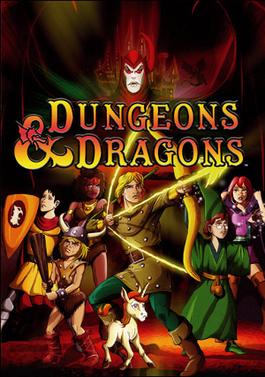
Fall 1983 was the morning the toy aisle and the arcade both moved in for good. A kid scanning the three networks that September found a cartoon about a Rubik's Cube, a whole anthology of video-game shows, a Dungeons and Dragons adventure, and Mr. T coaching a team of teenage gymnasts. Whatever was popular that year had already been turned into a Saturday cartoon.
On Saturday morning in fall 1983, CBS launched Saturday Supercade, an anthology of arcade-game cartoons, alongside a Dungeons & Dragons series. ABC turned the Rubik's Cube into Rubik, the Amazing Cube and the Monchhichi toys into a show. NBC added Mister T and revived Alvin and the Chipmunks, while the Smurfs held the center of its morning. It was the high-water mark of the cartoon built to sell a product kids already owned.
CBS · fall 1983
| Time | Show |
|---|---|
| 7:00 | Captain Kangaroo |
| 8:00 | The Biskitts |
| 8:30 | Saturday Supercade |
| 9:30 | Dungeons & Dragons |
| 10:00 | The Dukes |
| 10:30 | The Charlie Brown and Snoopy Show |
| 11:00 | Benji, Zax & the Alien Prince |
| 11:30 | The Bugs Bunny/Road Runner Show |
| 1:00 | The New Fat Albert Show |
| 1:30 | CBS Children's Film Festival |
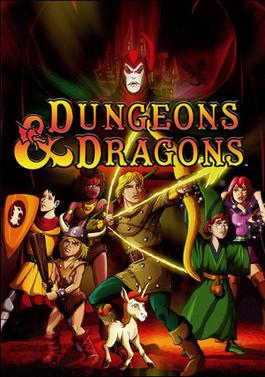
CBS carried the two biggest new ideas of the season. Saturday Supercade was an anthology that rotated cartoons based on arcade hits straight from the machines kids were feeding quarters into. Dungeons & Dragons brought the tabletop role-playing game to television as a genuine fantasy-adventure show, one of the more ambitious cartoons of the decade. The Charlie Brown and Snoopy Show gave the morning its one bit of hand-drawn calm.
ABC · fall 1983
| Time | Show |
|---|---|
| 8:00 | The Best of Scooby-Doo (Menudo on ABC at 8:25) |
| 8:30 | The Monchhichis/Little Rascals/Richie Rich Show |
| 9:30 | The Pac-Man/Rubik, the Amazing Cube Hour (Menudo on ABC at 10:25) |
| 10:30 | The Littles |
| 11:00 | The Puppy's Further Adventures |
| 11:30 | The New Scooby and Scrappy-Doo Show (Schoolhouse Rock! at 11:55) |
| 12:00 | ABC Weekend Special |
| 12:30 | American Bandstand |
ABC paired the previous year's Pac-Man with a new cartoon based on the Rubik's Cube, in which the puzzle came to life and helped a family of kids. The Monchhichis, adapted from the plush monkey toys, opened a block with the Little Rascals and Richie Rich. Between shows, the network ran short performance clips from the boy band Menudo, which is one of the odder things a kid could stumble onto at 8:25 on a Saturday.
NBC · fall 1983
| Time | Show |
|---|---|
| 8:00 | The Flintstone Funnies |
| 8:30 | Shirt Tales |
| 9:00 | The Smurfs |
| 10:30 | Alvin and the Chipmunks |
| 11:00 | Mister T |
| 11:30 | The Amazing Spider-Man and The Incredible Hulk |
| 12:30 | Thundarr the Barbarian (rerun) |
NBC kept the Smurfs at the heart of the morning and built around it with two familiar names. Alvin and the Chipmunks returned in a new series that would run for years, and Mister T animated the star of The A-Team into a coach guiding a team of teenage gymnasts through mysteries. NBC also swapped its old news bumper for One to Grow On, a short moral lesson that ran after most of its shows.
Inside Saturday Supercade
Saturday Supercade premiered on CBS September 17, 1983, produced by Ruby-Spears, and ran two seasons and 23 episodes (97 individual segments) before ending in December 1984. Each hour was an anthology of four 11-minute segments built from separate arcade licenses. Season one rotated Frogger, Donkey Kong, and Donkey Kong Jr. as fixed segments, with a fourth slot that alternated weekly between Pitfall! and Q*bert. Season two dropped Frogger and Pitfall! and brought in Kangaroo and Space Ace alongside the returning Donkey Kong and Q*bert. The show was CBS's direct answer to Pac-Man's success on ABC the year before, commissioned from the same corporate family that had already proven the arcade-cartoon formula worked (Ruby-Spears and Hanna-Barbera were both Taft Enterprises properties). Each hour ran four segments at roughly ten to thirteen minutes apiece, meaning a kid watching a single episode of Saturday Supercade sampled four different arcade licenses back to back, Frogger, Donkey Kong, and two more depending on the week, before the Bugs Bunny block even started.
The pushback
Dungeons & Dragons premiered on CBS the same day as Saturday Supercade, September 17, 1983, and ran three seasons and 27 episodes, leading its Saturday timeslot for two years and spawning more than 100 licensed products. It also drew real controversy. The script for one episode, "The Dragon's Graveyard," was nearly rejected because the heroes discussed killing their recurring antagonist, Venger, a level of violence CBS balked at for children's programming. In 1985, the National Coalition on Television Violence went further, demanding the FTC require a warning on every broadcast stating the show had been linked to real-life violent deaths. The show stayed on the air through the controversy, but the fight over it is remembered today as one of the clearer signs that toy- and franchise-driven cartoons had grown ambitious enough to worry the adults who were supposed to be selling through them. The reputation held up: decades later, in 2009, IGN ranked Dungeons & Dragons at number 64 on its list of the best 100 animated series ever made, a spot most of the season's toy-driven competition never came close to. Even the show's chief villain reflected the ambition: Tiamat, a five-headed dragon, was voiced by Frank Welker with a separate breath weapon for each head, and was written as the one creature in the series that Venger himself feared, a level of internal mythology well beyond what a toy-driven Saturday cartoon needed to bother with in order to sell action figures.
What changed from 1982
The licensing wave crested. The arcade cartoon multiplied from one show into a whole anthology on CBS, and ABC turned a puzzle toy into a series. Dungeons & Dragons and Mister T were new, the Monchhichis and the Biskitts came straight off toy-store shelves, and Alvin and the Chipmunks returned. The Smurfs stayed put at ninety minutes. The interstitials shifted too, with NBC running One to Grow On where Ask NBC News used to be.
The honest bottom line
By any honest measure, fall 1983 is when Saturday morning became a catalog. A striking share of the schedule existed to move product: video-game tie-ins, a Rubik's Cube show, plush-toy cartoons, a series built on a movie star's tough-guy image. Federal rules against program-length commercials were still loose, and the networks drove a truck through the gap. And yet the shows landed. Saturday Supercade really did feel like the arcade came home, Dungeons and Dragons was genuinely good enough to draw fire from a national anti-violence group over a single script, and a generation still remembers Mr. T telling them to treat people right. The morning was a sales floor. It was also, for a lot of kids, the best three hours of the week.
Sources
- Wikipedia, "1983-84 United States network television schedule (daytime)", Saturday section. The half-hour grid on this page is parsed directly from that article's wikitext, by colspan and rowspan, for exact slotting; the wikitext was saved verbatim at gate time. Wikipedia's own cited underlying archive for the network daytime pages is curtalliaume.com, via Internet Archive captures.
- Wikipedia, "<a href="https://en.wikipedia.org/wiki/Saturday_Supercade" target="_blank" rel="noopener">Saturday Supercade</a>", premiere/end dates, episode and season counts, the full season-one and season-two segment rosters, and the Taft Enterprises / Pac-Man connection.
- Wikipedia, "<a href="https://en.wikipedia.org/wiki/Dungeons_%26_Dragons_(TV_series)" target="_blank" rel="noopener">Dungeons & Dragons (TV series)</a>", premiere date, season and episode counts, the "The Dragon's Graveyard" near-cancellation controversy, the 1985 National Coalition on Television Violence FTC demand, and the 2009 IGN top-100 ranking.
- Method note: only the three broadcast networks' Saturday morning grids are reproduced here. No independent, UHF or cable lineup is claimed for this season.
Part of the Saturday morning 80s time-capsule series. Previous year: Saturday Morning Fall 1982. Next year: Saturday Morning Fall 1984.
Pajamas encouraged, the room opens early.
Frequently asked
What cartoons came on Saturday morning in 1983?
On CBS: Saturday Supercade, Dungeons & Dragons, the Biskitts, Charlie Brown and Snoopy, Bugs Bunny, and Fat Albert. On ABC: Scooby-Doo, the Monchhichis, Pac-Man, Rubik, the Amazing Cube, the Littles, and Richie Rich. On NBC: the Flintstone Funnies, Shirt Tales, the Smurfs, Alvin and the Chipmunks, Mister T, and Spider-Man with the Hulk.
What was Saturday Supercade?
Saturday Supercade was a CBS anthology, premiering September 17, 1983, that rotated four segments per episode built from arcade video games: Frogger, Donkey Kong, and Donkey Kong Jr. in season one with Pitfall! and Q*bert alternating in the fourth slot, then Q*bert, Donkey Kong, Kangaroo, and Space Ace in season two. It ran two seasons and 23 episodes at the height of the arcade craze.
Was there a Dungeons and Dragons cartoon in the 80s, and was it controversial?
Yes. The Dungeons & Dragons animated series premiered on CBS on September 17, 1983 and ran three seasons and 27 episodes, leading its timeslot for two years. It also drew real criticism: a script was nearly rejected over the heroes discussing killing a villain, and in 1985 the National Coalition on Television Violence demanded an on-air warning linking the show to real-life violence.
What was the Rubik cartoon?
Rubik, the Amazing Cube was an ABC cartoon in which a Rubik's Cube came to life and helped three siblings. It aired in an hour paired with Pac-Man in fall 1983, one of several shows that season built directly on a toy or game.
What time did Saturday morning cartoons start in 1983?
ABC and NBC opened their cartoon blocks at 8:00 a.m. CBS started earliest, at 7:00, with Captain Kangaroo ahead of its cartoons.