Taping It Off the TV: VHS Culture in the 80s Living Room

For most of the decade, pressing record on a television program was a legally contested act. Eight major studios spent eight years in court arguing that the machine in the living room should not exist in the form it did. The case reached the Supreme Court, it was decided by a single vote, and one of the witnesses who helped decide it was Mister Rogers.
Recording television at home was legally uncertain until January 17, 1984, when the Supreme Court ruled 5 to 4 in the Betamax case that taping a broadcast to watch later is fair use. The Court called it private, noncommercial time-shifting in the home. Fred Rogers had testified in support of the VCR manufacturers, and his testimony appears in the decision.
The machine was on trial
Universal City Studios and Walt Disney Productions sued Sony over the Betamax, arguing that by selling a machine capable of copying broadcasts, Sony was contributing to copyright infringement committed by its customers. The suit ran for eight years. A district court found for Sony, the Ninth Circuit reversed and held Sony liable, and the Supreme Court took the case.
The decision came down on January 17, 1984, by 5 to 4. The Court held that manufacturers could not be liable for what buyers did with a device that had substantial legitimate uses, and, more directly for anyone with a VCR under the television, that using it to record a broadcast program to watch later was fair use.
The phrase the Court settled on was "private, noncommercial time-shifting in the home." Its reasoning on that point is worth reading plainly: taping "merely enables a viewer to see such a work which he had been invited to witness in its entirety free of charge."
Mister Rogers testified for the VCR
The most quotable witness in a copyright case about home recording was a children's television host, and his testimony did real work in the outcome.
Fred Rogers testified before the district court in support of the manufacturers. The Supreme Court's opinion describes him as "president of the corporation that produces and owns the copyright on Mr. Rogers' Neighborhood," notes that the program "is carried by more public television stations than any other program," and records that "Its audience numbers over 3,000,000 families a day."
On the substance, the opinion states that Rogers "had absolutely no objection to home taping for noncommercial use and expressed the opinion that it is a real service to families to be able to record children's programs and to show them at appropriate times." That characterization is the Court's summary of his testimony rather than a transcript of his words, but the Court thought enough of it to build an argument on it, writing that if millions of people were copying "educational programs such as Mister Rogers' Neighborhood, and if the proprietors of those programs welcome the practice," then the business of selling the equipment "should not be stifled."
Justice Blackmun, dissenting, put the same fact less admiringly. He noted that "the only witness at trial who was clearly an exclusive copyright owner and who expressed no objection to unauthorized time-shifting was the owner of the copyright in Mister Rogers' Neighborhood."
Read either way, it is the same striking fact: the legal right to tape a show off the television in an American living room rests in part on the testimony of the man from the Neighborhood.
Not every program was fair game, and the guides said so
One detail from the trial record cuts against the idea that home taping was a lawless free-for-all before 1984. Some broadcasters were already telling viewers exactly what they could keep.
The station manager of an educational station in Los Angeles testified about the guide his station published for its own programs. For each program, the guide stated whether unlimited home taping was authorized, whether it was authorized with conditions such as erasing the tape within seven days, or whether it was not authorized at all. Of the 107 programs described in the Spring 1978 edition, 62 authorized some home taping and 21 authorized unrestricted home taping.
That is a broadcaster in the 1970s printing per-program taping permissions in a viewer guide, which is a stranger and more organized world than the one nostalgia usually describes.
Sony won the case and lost the format
The case is named for a machine that was already losing when the ruling arrived.
An Electronic Industries Association survey conducted in early 1986, covering 10,000 US households, found that the VHS share of the VCR market had risen from 71 percent in 1980 to 90 percent in 1985, while Betamax fell from 25 percent to 9 percent. The same survey put VCR ownership at about 35 percent of American households at the end of 1985, up from an estimated 25 percent at the start of that year, and reported the average purchase price falling from $728 in 1981 to $420 in 1985.
So the sequence runs like this. Sony spent eight years defending Betamax, won at the Supreme Court in January 1984, and secured the legal right to time-shift for everyone. By the following year nine out of ten machines being sold were VHS. The decision that made home taping safe is named after the format that lost.
What that meant in the room
The practical consequences were ordinary and specific. A machine that cost $728 in 1981 cost $420 by 1985, which is the difference between a major appliance and a Christmas present. Ownership roughly doubled across the decade's midpoint. And the thing people had bought was, legally speaking, a device for watching television later.
That is a narrower purpose than the machine ended up serving, but it was the one the Court protected, and it is the one that changed how a household related to a schedule. A program was no longer something that happened at a time. It was something that could be moved.
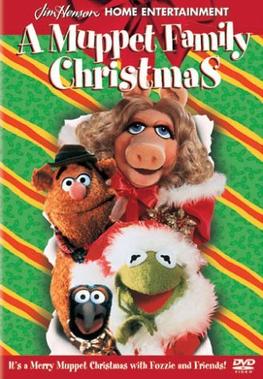
The limits were real, though, and they show up in what survives. Broadcast rights and home-video rights were separate things, and a special could be licensed for one and not the other. A Muppet Family Christmas, which premiered on ABC in December 1987, has never been released complete in North America, because several of its songs were cleared only for television. The only intact copies are the ones somebody recorded off the air.
The honest bottom line
The warm version of this story is a family taping a show and keeping it forever. The documented version is eight years of litigation, a 5 to 4 decision, and a right that four justices would have denied. Home taping was not an obvious freedom that everyone always had; it was a contested one, decided narrowly, and defended in part by a children's broadcaster who thought recording his program was a service to families. The tapes themselves were mostly bad, recorded over, mislabeled, and degraded on every viewing. What was genuinely new was not the picture quality. It was that a household could, for the first time, disagree with the schedule.
Sources
- Sony Corp. of America v. Universal City Studios, Inc., 464 U.S. 417 (1984). Argued January 18, 1983, decided January 17, 1984. Majority opinion, including the Kenaston and Rogers testimony at 445, and Justice Blackmun's dissent.
- "Survey indicates continuing VCR boom," UPI, April 10, 1986, reporting an Electronic Industries Association survey conducted by Market Facts Inc., January 21 to February 20, 1986, covering 10,000 US households.
Part of the 80s kids TV collection on watch culture. See also TV Guide in the 80s.

No pause button needed anymore, the shows just play.
Frequently asked
Was it legal to record TV shows in the 80s?
Yes, after January 17, 1984. That is when the Supreme Court decided the Betamax case, ruling 5 to 4 that recording a broadcast program at home to watch later is fair use and that VCR manufacturers are not liable for what buyers do with the machines.
What was the Betamax case?
Sony Corp. of America v. Universal City Studios, decided in 1984. Universal and Disney sued Sony, arguing that selling the Betamax made it responsible for copyright infringement by its customers. After eight years of litigation the Supreme Court ruled for Sony and protected what it called private, noncommercial time-shifting in the home.
Did Mister Rogers really testify about VCRs?
Yes. Fred Rogers testified before the district court in support of the manufacturers. The Supreme Court's opinion records that he had no objection to home taping for noncommercial use, and the dissent noted he was the only clear exclusive copyright owner at trial who raised no objection to it.
How many people had a VCR in the 80s?
An Electronic Industries Association survey of 10,000 US households found VCR ownership at about 35 percent of American households at the end of 1985, up from an estimated 25 percent in January of that year.
Why did VHS beat Betamax?
The market moved decisively. The same 1986 survey found VHS had gone from 71 percent of the VCR market in 1980 to 90 percent in 1985, while Betamax dropped from 25 percent to 9 percent. Sony won the Supreme Court case and lost the format war.
Why are some shows only available as off-air recordings?
Because broadcast rights and home-video rights were licensed separately. A program could be cleared to air but not to sell on tape, usually over music. A Muppet Family Christmas is the standing example: it has never been released complete in North America, so recordings made off the air are the only intact copies.