When TV Went to Bed: Sign-Offs, Test Patterns, and High Flight
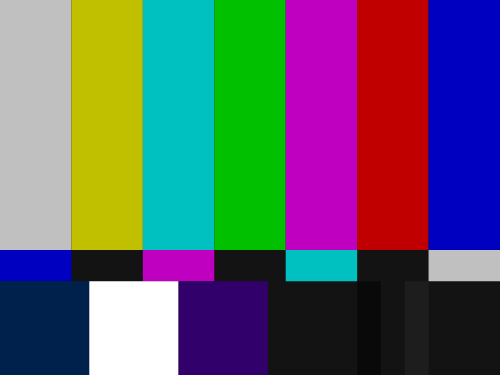
There was a point in the night when television stopped. Not a bad show, not an infomercial, not a repeat: the picture ended, the station left the air, and whatever came out of the set afterward was not programming. This was normal, it was printed in advance, and a person under a certain age has never seen it happen.
Television stations used to end their broadcast day rather than run 24 hours. The sign-off was scheduled and published: TV Guide for October 31, 1986 lists Detroit programming through 1:40 AM and then simply Sign-off. Stations closed with a test pattern, sometimes a tone, and at many stations a short film built around the poem High Flight.
It was on the schedule
The strongest evidence that this was routine is that a national magazine printed it like any other listing.
The TV Guide covering Friday, October 31, 1986 runs its Detroit listings deep into the night. The final page of that day, page A-159, is headed for 1:40 AM to Sign-off. The listings track programs right up to the end, and then the day is over. There is no overnight column because for many stations there was no overnight.
That single line does more work than any recollection. In 1986 the end of the broadcast day was a fixed, announced, printable event, planned far enough ahead that a weekly magazine could set it in type.
The test pattern was a tool, not a screensaver
The card that appeared when programming stopped was an engineering instrument, and it was aimed at two different audiences at once.
Test cards are broadcast when the transmitter is running but nothing is being programmed, often at sign-on and sign-off, and they are sometimes accompanied by a tone. The pattern let station engineers confirm the signal was clean, and it let people at home tune their sets against a known reference.
The most famous of them, the Indian-head test pattern, was created by RCA at its factory in Harrison, New Jersey, as the fixed image for the TK-1 monoscope, a camera capable of producing nothing but the picture built into it. The portrait was drawn in August 1938, and the full pattern was introduced in 1939. Every element did a job: the grid and circles checked perspective, framing and linearity, the tapered lines checked resolution and frequency response, and the gray bands measured differential gain, contrast and white level. An experienced engineer could look at it and name the fault.
The Indian head was already gone by the 80s
Here is the correction this subject needs, because the image and the era get welded together in memory and the dates do not support it.
The Indian-head pattern was built for black-and-white television. It became a fixture across North America through the 1940s and 1950s and was made obsolete by the arrival of color television in the 1960s. By the 1980s it belonged to history, not to the schedule.
What an American viewer actually saw at sign-off in the 1980s was the SMPTE color bars, the standard NTSC pattern, which carry a set of calibrated bars plus analog black at 7.5 IRE, full white at 100 IRE, and a sub-black step below zero. Less charming, more useful, and the correct answer for the decade.
So a person who remembers the Indian head is remembering something real, just earlier than they think, most likely from a rerun of the pattern's afterlife or from a station that kept using it well past its usefulness.
High Flight
The other thing many stations put on at the end of the night was a poem.
High Flight is a sonnet written in 1941 by John Gillespie Magee Jr., a fighter pilot with the Royal Canadian Air Force. He began it on 18 August 1941 and mailed a finished copy to his family on 3 September, three months before he was killed in a training accident on 11 December 1941, making him one of the first American casualties of the war after Pearl Harbor. It was published first in the Pittsburgh Post-Gazette and exhibited at the Library of Congress the following year.
Its second life was on television. Many American viewers met the poem because stations ended, and sometimes opened, their programming day with short films built around it. KPTV in Portland, Oregon and KCRA in Sacramento, California ran a sign-off film in which the poem was spoken over Air Force flying footage.
It is a strange and specific piece of programming: a war poem by a dead 19-year-old pilot, set to aircraft, played to whoever was still awake, as the last thing a station transmitted before shutting down for the night.
Why it ended
Sign-offs did not get abolished; they got outcompeted.
The reason test cards are now rare is the same reason sign-offs are: most North American broadcasters moved to a 24-hour schedule. Once there was inventory to fill the overnight, whether syndicated repeats, paid programming, or a cable feed, the hours that used to be dark became hours that could be sold. A station that goes off the air earns nothing between 1:40 AM and dawn.
The technology to keep a transmitter running unattended was not the obstacle by then. The economics changed, and the ritual had no defenders, because nobody had ever loved the test pattern. They had just seen it a lot.
The honest bottom line
The affection here is almost entirely retrospective. Nobody in 1986 stayed up for the sign-off on purpose; it was what happened when you failed to go to bed, and the tone that followed was genuinely unpleasant. The pattern was a calibration tool, the poem was cheap and dignified filler, and the reason the station stopped was that running a transmitter for an audience of nobody cost money. What people actually miss is the edge. A broadcast day with an end had a shape, and a household that reached that shape had unmistakably reached the end of something. Continuous television removed the edge, which is good for the network and a real loss for anyone who ever needed the day to be over.
Sources
- TV Guide, Detroit Edition, week including Friday October 31, 1986, page A-159, headed 1:40 AM to Sign-off. Read directly.
- "Indian-head test pattern," for the RCA origin, the 1938 portrait, the 1939 introduction, the TK-1 monoscope, the diagnostic elements, and its obsolescence with color television in the 1960s.
- "Test card," for sign-on and sign-off use, SMPTE color bars and their IRE levels, and the effect of 24-hour schedules.
- "High Flight," for Magee's authorship and dates, first publication in the Pittsburgh Post-Gazette, and the poem's use in station sign-off films at KPTV and KCRA.
Part of the 80s kids TV collection on watch culture. See also Reading the Grid and Taping It Off the TV.


Nothing signs off in the room where the anthem never plays.
Frequently asked
When did TV stations sign off at night?
It varied by station and market. TV Guide's Detroit listings for the night of October 31, 1986 carry programming until 1:40 AM and then list Sign-off. Many stations closed somewhere between midnight and the early hours and returned before dawn.
Why did TV go off the air at night?
Because there was no money in the overnight. Running a transmitter costs something and an audience that small could not be sold to advertisers profitably, so stations ended the broadcast day. Once syndicated repeats, paid programming and cable feeds made the overnight sellable, stations moved to 24-hour schedules and sign-offs disappeared.
What was the Indian head test pattern?
An engineering test card created by RCA and introduced in 1939, built as the fixed image for the TK-1 monoscope. Its grid, circles, tapered lines and gray bands let an engineer check linearity, resolution, frequency response, contrast and white level at a glance.
Was the Indian head test pattern still used in the 80s?
No. It was designed for black-and-white television and was made obsolete by color television in the 1960s. By the 1980s the pattern an American viewer would see at sign-off was the SMPTE color bars, the standard NTSC test pattern.
What was the poem they played when TV signed off?
High Flight, a 1941 sonnet by Royal Canadian Air Force pilot John Gillespie Magee Jr., who died in a training accident that December. Numerous US stations closed their broadcast day with short films built around it, typically the poem spoken over footage of aircraft.
When did TV stations stop signing off?
Gradually, as broadcasters moved to 24-hour schedules. That shift is also why test cards, which were shown when the transmitter was on but nothing was being programmed, became a rare sight in North America.