Vicki the Robot · How Small Wonder Built Its Star
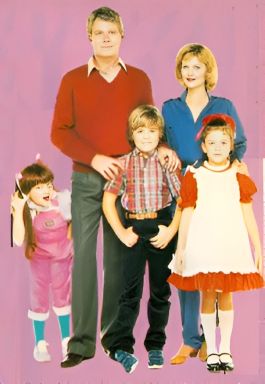
A production cast a nine-year-old girl to play something with no feelings, put her in the same dress every day, and told her never to smile on camera. She carried an entire syndicated series that way, always on screen, always the center of the shot. And when she inevitably started to grow up, the writers did the only thing they could: they rebuilt the robot to keep pace with her.
Vicki, short for V.I.C.I. (Voice Input Child Identicant), was the robot girl at the center of Small Wonder, played by Tiffany Brissette from age nine. The whole show was built on her deadpan android performance, and as Brissette aged the writers re-engineered the character, "upgrading" Vicki so she could look older, eat, and drink. Brissette pulled back from Hollywood soon after the show ended in 1989, earned a psychology degree, and became a nurse.
What Vicki actually was
Vicki was an engineering premise as much as a character. In the show, the storylines "revolve around V.I.C.I. (an acronym for Voice Input Child Identicant, pronounced 'Vicki'), an android in the form of a young girl," built by Ted Lawson of United Robotronics. Her specs were part of the joke. Per the show's record, "Vicki's features include superhuman strength and speed, an AC outlet under her right arm, a data port under her left arm, and an access panel in her back."
The comedy ran on the gap between those specs and a human household. As the record puts it, the humor "frequently derived from Vicki's attempts to learn human behavior, her unprecedented echolalia, the robot's literal interpretation of speech and the family's efforts to disguise the robot's true nature." Told to make herself at home, Vicki might start rearranging furniture. Asked a question, she answered it exactly, and only it. She wore one costume, a red-and-white pinafore, and delivered nearly every line in a flat monotone. That was the entire engine of the show, and it all sat on one child performer.
The hardest job on the set
Playing Vicki asked Brissette to suppress everything a young performer is trained to do. She had to stay robotic at all times, in the same clothes, betraying no emotion, and she had to do it as the lead of the show rather than a supporting bit. Castmates who watched it up close called it a genuinely difficult job.
"I know she got frustrated that she couldn't wear different clothes, and she had to talk in the monotone," Marla Pennington Rowan, who played mother Joan, told Yahoo TV in 2015. "That was a big frustration for her. But she was a pro." The cruelty of the part, as Emily Schulman Webster described it, was that skill made it harder, not easier. "The better she did at portraying a robot, the harder it was for her... I do remember that she had to bite the inside of her cheeks to keep from smiling," Webster said. "That was tough. My heart sort of broke for her."
Brissette had range the role deliberately hid. A veteran of child pageants, she could sing, dance, ride horses, play piano, and do gymnastics, and Vicki let her show none of it. "I really respected her... she was brilliantly talented," Webster told Yahoo TV. "She could do everything. She was like a little machine." On top of the performance came the technical load: every Thursday morning was reserved for the effects shots of Vicki spinning her head or lifting a person one-armed, filmed with early green-screen. "Again, that was something Tiffany had to endure," Webster said. The rest of the cast learned to stay out of those shots to skip the hair and makeup, which is why so many of Vicki's effects are of Vicki alone.
Rebuilding the star to keep her
The problem with building a show around an ageless robot is that the actress playing her does not stop aging. Small Wonder's answer was to rewrite the machine to match the child, which is a rare thing to watch a series do in real time.
The first fix came in the third season. To explain Brissette's visible growth, the writers had Ted give Vicki "an upgrade," aging her face, dressing her in casual clothes, and letting her eat and drink, with the food passing through her naturally and the drink cooling her internal system. It was a piece of in-universe engineering written for the sole purpose of keeping the star usable. Behind the scenes, the producers were also racing the calendar. "They were so aware that the kids were going to be growing, so we just did as many shows as we could before they started seeing it," Rowan told Yahoo TV. By the fourth season the strain was open in the writers' room. "I remember lots of talks about, 'What are we going to do when she hits puberty?' and 'How are we going to make it make sense?'" Webster recalled. The on-screen solution was to say Ted had lengthened Vicki's joints. A robot that was never supposed to change had, by the end, been redesigned twice to keep up with the girl inside it.
Where Vicki went
When Small Wonder ended in 1989 after 96 episodes, its lead pulled back from acting fairly quickly. According to a 2026 TVLine retrospective drawing on her public biography, Brissette, who was nine when she debuted as the monotone android, took a few more jobs before stepping away: voice work on the faith-based radio drama Adventures in Odyssey in 1990, a 1991 appearance on Parker Lewis Can't Lose, and a recurring part on the ABC legal drama Equal Justice, her final television stint. She then earned a bachelor's degree in psychology from Westmont College.
The clearest public account of what came next came from Brissette herself. On a January 14, 2009 "Where Are They Now?" segment on The Morning Show with Mike & Juliet, she said she had left acting and become a nurse in Boulder, Colorado, and that she had not spoken to her castmates in years, before the hosts surprised her with a satellite reunion featuring Dick Christie, Marla Pennington, and Edie McClurg. That is where the public record of Vicki's actress sensibly ends. The recurring "whatever happened to the girl who played Vicki" curiosity says more about how strongly the character stuck than about anything owed by the person who played her, and the honest answer is a straightforward one: she grew up and chose a different life.
How the telling has grown over the decades
- 1985 to 1989. Vicki airs as the deadpan center of the show, with almost no contemporary press about the performance behind her.
- 2009, The Morning Show with Mike & Juliet. Brissette resurfaces on a "Where Are They Now?" segment, states plainly that she left acting to become a nurse, and is reunited on air with several castmates for the first time in years.
- 2015, Yahoo TV. Castmates Marla Pennington Rowan and Emily Schulman Webster describe, for the first time in detail, how hard the role actually was on Brissette and how the show engineered around her growth.
- 2020s onward. The where-are-they-now cycle keeps returning to Vicki specifically, treating "what happened to the robot girl" as a small evergreen mystery, long after the answer was on the record.
The one thing worth flagging is that the performer's own voice is thin in this story. Most of what is known about playing Vicki comes from her castmates rather than from Brissette, who has given very little about it herself, and the post-show record here is public and deliberately kept that way.
The honest bottom line
Vicki was a great idea handed to a child and made deliberately hard to play. The show asked its youngest star to erase her expression, wear one outfit, and hold still for primitive effects, then rewrote her twice as machinery when the girl underneath kept growing. It worked because Brissette was good enough to make a monotone robot the most watchable thing on a very strange show. That she walked away from all of it for an ordinary, useful career is not a sad ending. It is arguably the most sensible thing anyone connected to Small Wonder ever did.
Sources
- Wikipedia, "Small Wonder (TV series)" (V.I.C.I. definition, Vicki's features, the humor description, and the third-season upgrade, cross-checked).
- Yahoo TV, "'Small Wonder': The Strange True Story Behind the Weirdest Sitcom of the '80s," Dave Nemetz, 2015 (interviews with Marla Pennington Rowan and Emily Schulman Webster).
- TVLine, "What Happened to Small Wonder Star Tiffany Brissette After the Sci-Fi Sitcom Was Canceled?", Gil Macias, 2026 (citing Brissette's public biography and her January 14, 2009 television appearance).
She was built for the living room, and ours is on. More show stories live at /full-story/. Related: the full story of Small Wonder and the full story of You Can't Do That on Television.

Frequently asked
Who played Vicki on Small Wonder?
Tiffany Brissette played Vicki, starting at age nine. She carried the show as its central character across all four seasons and 96 episodes from 1985 to 1989.
What does V.I.C.I. stand for?
V.I.C.I. stands for Voice Input Child Identicant, pronounced "Vicki." In the show, she is an android built to look like a young girl by engineer Ted Lawson.
Why did Vicki always talk in a monotone and wear the same dress?
Because the character was a robot, and the performance had to sell that at all times. Castmates said the role's rigid rules, the flat voice, the unchanging red-and-white pinafore, and no visible emotion, were a real strain on a child performer.
How did the show deal with Tiffany Brissette growing up?
It rewrote the robot. In the third season the writers gave Vicki an "upgrade" that aged her face and let her eat and drink, and in later seasons they explained her growth by saying her joints had been lengthened. The producers also filmed extra episodes early to stay ahead of her aging.
What happened to Tiffany Brissette after Small Wonder?
She took a few more acting jobs into the early 1990s, earned a degree in psychology, and left the industry. On a 2009 television segment she said she had become a nurse in Boulder, Colorado.