The Full Story of Small Wonder

A robotics engineer builds an android that looks like a ten-year-old girl, dresses her in a red-and-white pinafore, and passes her off to the neighbors as his adopted daughter. The show around that premise was dubbed into dozens of languages and mobbed by fans, then later crowned one of the worst programs in television history. And the three child actors at its center needed three separate tutors, because their parents could not agree on sharing one.
Small Wonder was a first-run syndication sitcom that aired from September 7, 1985 to May 20, 1989, created by veteran producer Howard Leeds. It starred 10-year-old Tiffany Brissette as V.I.C.I., or Vicki, a robot girl an engineer secretly builds and raises as his adopted daughter. Cheap, strange, and wildly popular with kids around the world, it ran 96 episodes across four seasons before a corporate power struggle ended it, and was later rebranded as a cult "worst show ever."
The premise nobody could quite believe
The concept was pitched with a straight face. Vicki was an acronym, V.I.C.I., for Voice Input Child Identicant, an android built by engineer Ted Lawson of United Robotronics, according to the show's own record, "in an effort to assist handicapped children." Lawson brings the robot home so it can mature inside a family, then the Lawsons try to pass her off as a legally adopted orphan. Vicki had superhuman strength and speed, an electrical outlet under one arm, a data port under the other, and an access panel in her back. She spoke in a flat monotone and took every instruction literally, which was most of the comedy.
To the cast, it read as odd from the first script. "Oh, I thought it was strange, yeah," Marla Pennington Rowan, who played mother Joan, told Yahoo TV in 2015. "It was a kids' comedy, and kind of science fiction. I was just happy I didn't have to say all those long words that Dick had to say." Emily Schulman Webster, who played nosy neighbor Harriet, remembered her own father reading the future in it: "My dad was reading this script and saying, 'This is going to happen! We're gonna have robots.'"
The theme song, "She's a Small Wonder," promised a girl "fantastic, made of plastic," and it lodged in a generation's memory as firmly as anything the show did on screen.
Making a girl play a machine
The role of Vicki fell on a ten-year-old, and it asked her to erase everything a child performer is trained to project. Brissette had to stay robotic at all times, in the same pinafore, in the same monotone, showing no feeling at all. "I know she got frustrated that she couldn't wear different clothes, and she had to talk in the monotone," Rowan told Yahoo TV. "That was a big frustration for her. But she was a pro."
Webster, close to Brissette's age on set, watched the strain up close. "I really respected her... she was brilliantly talented," she said. "She could do everything. She was like a little machine. But it was very challenging for her. The better she did at portraying a robot, the harder it was for her... I do remember that she had to bite the inside of her cheeks to keep from smiling. That was tough. My heart sort of broke for her." Brissette, a veteran of child pageants, could sing, dance, ride horses, play piano, and do gymnastics, and the part let her show none of it.
Then there were the effects. Every Thursday morning was set aside for the shots where Vicki's head spun around or she lifted a person with one arm, filmed with a primitive version of green-screen technology. "Again, that was something Tiffany had to endure," Webster said. "It would take a lot of trial and error." The rest of the cast learned to disappear on effects day. "You were just trying to stay away from her, so you wouldn't have to get in hair and makeup to be in that shot," Rowan remembered. "When Tiffany was going to do something special, we'd just be like, 'Oh, I think I'll sit over here!'"
The feud behind the family
On camera, the Lawsons were a warm household. Off camera, the adults playing them got along fine and the families around them did not. "We were just one big happy family," Rowan said of the cast itself. The parents of the three child actors were another matter. The production had to hire three separate tutors, one per child, because the parents could not agree on a single one.
"It was like Clash of the Titans," Webster told Yahoo TV. "None of the parents got along... and it wasn't like it was always fun and games for us kids. There was definitely tension between us." Rowan felt it from the adult side of the set. "The parents thought they were the stars. So it was just like, 'Oh, my goodness.' I'd just stay out of it." Brissette's mother, Diane, was often at the center of it, pushing producers to let her daughter show more range. Webster put it carefully: "Her mother was a great... advocate for her daughter."
A worldwide hit that became a punchline
For all of that, Small Wonder worked with its actual audience. It ran on Saturdays against thin competition, and kids found it. Webster remembered the scale of it from the sidewalk: anytime she went out in public, she felt like a major celebrity. The reach was global. "It was dubbed in, like, 52 different languages," Rowan said.
That is the strange double life of the show, and the real drift in how it is remembered. In its own time it was a genuine international hit that children loved. In retrospect it became a byword for bad television, singled out in "worst show ever" lists, and the cast has had to carry both verdicts at once. Rowan shrugs at the critics: "It doesn't hurt me one way or the other. It was a job. I got paid... It's certainly not my best work. I don't think anyone would say it was their best work. But it was fun, and I don't think it really harmed anybody." For Webster, the later mockery cut deeper, especially as a teenager teased for it: "I wish that we had been close, then, so we could have had a support group! Because that was really, really, really hard."
How five companies ended it
Two problems closed the show, one biological and one corporate. The biological one was that a robot who never ages was being played by a child who very much did. By the fourth season it could not be ignored. "I remember lots of talks about, 'What are we going to do when she hits puberty?' and 'How are we going to make it make sense?'" Webster said. The show's on-screen answer was to have Ted lengthen Vicki's joints, and the producers had already spent seasons quietly racing the clock. "They were so aware that the kids were going to be growing, so we just did as many shows as we could before they started seeing it," Rowan said. Earlier, the producers had given Vicki a third-season "upgrade," aging her face, putting her in casual clothes, and letting her eat and drink, to cover Brissette's own growth.
The corporate problem finished it. By Rowan's account the show sat under a tangle of owners who stopped agreeing. "We were actually owned by five different companies: Metromedia, and Fox, and Rupert Murdoch had some money in it," she told Yahoo TV. "And after a while, they just didn't agree... And they knew that they got enough shows to do syndication, so why produce anymore?" The run ended in 1989 at 96 episodes, with no real finale, because nobody knew until it was over. "Nobody knew if we were going to get picked up or not," Webster said. "So we didn't have the big send-off where everybody gets a nice, clean ending to their story." The show then lived for decades in syndication and on retro-TV channels, which is where most people who quote its theme song first found it.
How the telling has grown over the decades
- 1985 to 1989. The show airs as syndicated filler with almost no behind-the-scenes press. The making-of story is essentially undocumented at the time.
- 2015, Yahoo TV. For the 30th anniversary, Dave Nemetz interviews cast members Marla Pennington Rowan and Emily Schulman Webster, producing the first real account of how the show was made: the three tutors, the effects Thursdays, the burden on Brissette, and the corporate collapse. Nearly every detailed telling that circulates today traces back to this piece.
- 2020s, the where-are-they-now cycle. Podcasts and cast-retrospective articles pick the show back up, driven less by the production story than by curiosity about what became of Vicki, especially Brissette's departure from acting.
The honest note on the record is that Small Wonder was barely documented while it existed. The story people tell now was assembled decades later, mostly from two cast members, and the biggest gaps, the creators' and producers' own accounts, largely went unrecorded before they were gone. The reason for the cancellation, in particular, rests on Rowan's memory of the ownership fight rather than a paper trail, and it is presented here as her telling.
The honest bottom line
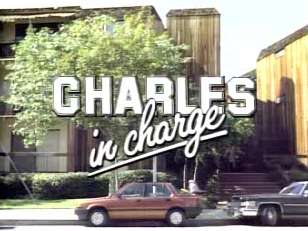
Small Wonder was cheap, formulaic, and built on a premise that does not survive a second thought, and its laugh track ran over a set with feuding families and a ten-year-old asked to feel nothing on camera all day. It has earned its place on the lists. But it was also a real hit that children in dozens of countries loved without irony, and the people who made it mostly remember it with affection rather than shame. A robot girl in a pinafore turned out to be more durable than almost anyone involved expected, which is its own small wonder. Charles in Charge walked the same path through the same market, another show that aired in syndication because the economics were more forgiving than the networks, and both proved that a sitcom only needs its audience, not its industry's respect.
Sources
- Yahoo TV, "'Small Wonder': The Strange True Story Behind the Weirdest Sitcom of the '80s," Dave Nemetz, 2015 (interviews with Marla Pennington Rowan and Emily Schulman Webster).
- Yahoo Entertainment, "Whatever Happened to the Cast of Forgotten '80s Sitcom Small Wonder?" (post-show public record, cross-checked).
- Wikipedia, "Small Wonder (TV series)" (air dates, premise, V.I.C.I. definition, cast, episode count, and third-season upgrade, cross-checked).
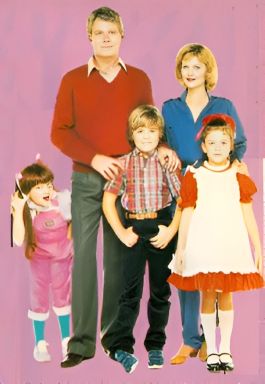
Vicki would approve of a room this well programmed. More show stories live at /full-story/. Related: how Small Wonder built its star, Vicki the robot and the full story of Charles in Charge, the other sitcom syndication brought back.
Frequently asked
What was Small Wonder about?
It was a sitcom about a robotics engineer, Ted Lawson, who secretly builds an android that looks like a young girl, names her V.I.C.I. (Vicki), and raises her with his family while passing her off as an adopted daughter. The comedy came from Vicki's superhuman abilities, her flat monotone, and the family's efforts to hide what she really was.
Who played Vicki on Small Wonder?
Ten-year-old Tiffany Brissette played Vicki. The role required her to stay robotic and expressionless at all times, in the same outfit, and castmates remembered her biting the inside of her cheeks to keep from smiling.
When did Small Wonder air, and how many episodes were there?
It aired in first-run syndication from September 7, 1985 to May 20, 1989, running 96 episodes across four seasons. It continued in syndication and on retro-TV channels for years afterward.
Why was Small Wonder cancelled?
By cast member Marla Pennington Rowan's account, the show was owned by several companies that stopped agreeing, and once enough episodes existed to sell into syndication, there was little reason to keep producing. The separate practical problem was that Brissette was aging out of the ageless-robot role.
Was Small Wonder actually popular?
Yes. It ran on Saturdays against light competition, drew large young audiences, and was dubbed into dozens of languages internationally. Its reputation as one of TV's "worst shows" came later, in retrospect.
What is V.I.C.I. short for?
V.I.C.I. stands for Voice Input Child Identicant, pronounced "Vicki." In the show, the robot was built by engineer Ted Lawson, described as an effort to assist handicapped children.