The Full Story of Pee-wee's Playhouse
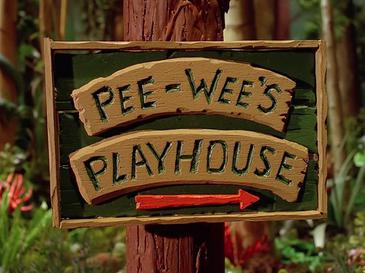
A network offered a comedian a cartoon and he turned it down to build a live-action house full of talking furniture instead. The set was assembled by downtown New York painters who had never worked in television and were told to get as weird as they wanted. The loft where it was born has been remembered, not entirely fondly, as a sweat shop. One of the designers remembered the work itself as the best job he could imagine. Both are in the record.
Pee-wee's Playhouse was a live-action Saturday morning show created by and starring Paul Reubens as Pee-wee Herman. It premiered on CBS on September 13, 1986 and ran five seasons and 45 episodes through November 17, 1990, on a prime-time budget of $325,000 per episode with full creative control. Built by artists Gary Panter, Wayne White, and Ric Heitzman, scored by Devo's Mark Mothersbaugh, and fronted with a theme sung secretly by Cyndi Lauper, it won a run of Daytime Emmys and rewrote what children's television could look like.
The comic who said no to a cartoon
Pee-wee Herman was already a decade old when CBS came calling. Reubens developed the character at the Groundlings improv troupe in Los Angeles, mounted The Pee-wee Herman Show as a stage production in 1980, taped it as an HBO special, and rode it into a hit movie, Pee-wee's Big Adventure, directed by Tim Burton in 1985. After the movie, CBS approached Reubens with what the Los Angeles Times in 2006 described as an ill-received cartoon series proposal. Reubens wanted the opposite of a cartoon.
"I'd had the stage show originally, so I was much more interested in doing something closer to that, something live-action," Reubens told Mental Floss for its anniversary rundown. He pointed to Howdy Doody and Captain Kangaroo as the models he grew up on, the live kids-show format he wanted to drag into the 1980s. CBS agreed. In 1986 the network signed him to act, produce, and direct a live-action Saturday morning program at a reported $325,000 per episode, a figure The New York Times noted that September was comparable to a half-hour prime-time sitcom, and handed him full creative control, although, as the A.V. Club later reported, CBS did request a few minor changes over the years.
A set built by people who did not make television
The look of the Playhouse, the talking floor and the genie in the box and the pterodactyl in the rafters, did not come from a network art department. It came from painters. Reubens brought in Gary Panter, Wayne White, and Ric Heitzman, downtown-scene artists who treated the set like an evolving installation rather than a backdrop.
Panter had been with Pee-wee since the beginning. "When they did the first stage show at the Groundlings, I was contacted to do a poster for the show for free," he told Artnet News in 2023. "So, I said I would like to design everything. There was no budget. Everyone was working for free. It was like pastel Bauhaus and had to be broken down every night." When the stage show became a network program, that sensibility scaled up. "Paul [Reubens], Ric, and Wayne, we're all painters," Panter said. "We really brought the sensibility of art and art history to the set." His private word for what they were doing was not decoration. "By the time Pee-wee arrived, it was about orchestrating chaos."
White described a workplace with almost no rules and a boss who rewarded strangeness. "He liked the same stuff we did, and he was open to experimenting," White told Artnet. "The weirder I tried stuff, the more he liked it. He was the dream boss. I never found another situation like that all my years in show business. The power of the Playhouse is that we weren't television professionals. We were always downtown New York painters, sculptors, cartoonists, just doing our thing." The team even wrote design rules to break the era's clichés. "One of our rules design-wise was no flying triangles and no squiggly lines," White said. "We were trying to bust out of this certain early '80s graphic look that everybody expected at the time."
White also rebuilt the show's puppetry from scratch, deliberately against the dominant style. "I was very anti Muppet," he told Artnet. He wanted to get away from the look where "everything had a felt head with ping-pong ball eyes" and to "bring back this other look," the hard carved faces of older TV puppeteers. "Paul let me become a puppeteer and a voice actor too, and I never thought that was going to happen," White said. "He legitimized me and gave me the confidence to become a performer."
The sweat shop and the dream job
The first season was made in New York City in the summer of 1986, in a converted loft at 480 Broadway. That season has come down through the tellings two different ways. Mashable's 2022 anniversary piece records that it was filmed in what was "later remembered not entirely fondly as a 'sweat shop'" at 480 Broadway; the phrase is offered there as a general recollection and is not attributed to any named person. Wayne White, one of the production designers, remembered the work itself in the opposite register: "Just the best job you can imagine." That contrast is not a flaw in the record; it is the record. A crew chasing a Saturday deadline and a painter handed unlimited license were describing one production from opposite ends.
For season two, in 1987, Reubens moved production to Los Angeles. Entertainment Weekly reported that the move to a Hollywood Center Studios soundstage brought a new set and a more relaxed work atmosphere, with more space to work in. The show shifted studios again in 1989, to The Culver Studios, for its final two seasons. The show held its CBS Saturday slot through those changes; the network grids for fall 1987, fall 1988, and fall 1989 each show where Pee-wee's Playhouse sat.
The music made in a week and the theme no one signed
The Playhouse sound was as unlikely as its sets. Reubens hired Mark Mothersbaugh of Devo, who was on hiatus from the band, and the pace was punishing. "Pee-wee's Playhouse was really chaotic," Mothersbaugh told Moviefone in 2006. "They'd send me the tape from New York on Tuesday. I'd watch it Tuesday night; Wednesday I'd write the music. Thursday I'd record the music, it'd go out Thursday night to them, they'd have Friday to cut it into the picture, and then Saturday we'd watch it on TV. And it was like really fast, and instead of writing an album once a year I was writing an album's worth of music once a week." Todd Rundgren, Danny Elfman, Van Dyke Parks, and The Residents all contributed as well.
The theme song is the show's best-kept secret. It is credited on screen to "Ellen Shaw." That singer does not exist. In her 2012 memoir, Cyndi Lauper explained the pseudonym in her own words. "I told him I would [sing it], but I couldn't have it under my name because I was going to put out 'True Colors', which had a serious tone," Lauper wrote. "In our superficial world, people couldn't accept both at the same time. So I sang the theme song using the pseudonym Ellen Shaw. And then Paul sent me back a tape that was so hilariously funny of me singing the theme with him in between saying, 'Oh no! My career is ruined, oh no!' He's a nut, I love him."
The house that launched careers
The Playhouse was a launch pad hiding in plain sight. Reubens filled it with people from the Groundlings and the stage show: Phil Hartman as Captain Carl, who left after the first season to join Saturday Night Live; John Paragon as the genie Jambi; Lynne Marie Stewart as Miss Yvonne; and a young Laurence Fishburne as Cowboy Curtis. Fishburne, per Mental Floss, auditioned in a tone the show found too dark and serious and was told to lighten it up. S. Epatha Merkerson played Reba the Mail Lady. The behind-the-scenes roster was just as loaded: The Hollywood Reporter noted in 2023 that future Boyz n the Hood director John Singleton worked the show as a security guard and production assistant, and Consequence reported that a young Rob Zombie was a production assistant too. Even the clay-animation inserts came from future legends, some produced by the UK's Aardman Animations, who would go on to make Wallace and Gromit.
The awards followed. The Playhouse won a run of Daytime Emmys across 1987 to 1991; the archival record counts 11, though tallies vary by source. The show ended after five seasons, when CBS and Reubens mutually agreed to conclude it, and its reruns were pulled in 1991.
How the telling has grown over the decades
- 2006, the 20th-anniversary cluster. The making-of story first gets told in depth around the show's twentieth birthday. The Los Angeles Times and the A.V. Club lay out the deal (the rejected cartoon, the prime-time budget, the creative control with a few CBS notes). Entertainment Weekly records the New York-to-LA move. And Moviefone captures Mark Mothersbaugh's account of the one-week music assembly line, the detail that shows how fast the whole machine actually ran.
- 2012, Cyndi Lauper's memoir. Lauper puts the Ellen Shaw mystery to rest in her own words, explaining she hid the credit to protect the serious rollout of "True Colors."
- 2016, Mental Floss. The 30th-anniversary fact roundup consolidates the origin (live-action, not a cartoon) and surfaces Reubens admitting he lost money on the show and was personally responsible for it financially.
- 2022, Mashable. The phrase "sweat shop" is attached to the first-season loft, unattributed, the counterweight to every account that remembers the Playhouse as pure play.
- 2023, the design oral histories. After Reubens died on June 30, 2023, the artists finally get the spotlight. Artnet's interviews with Gary Panter and Wayne White reframe the whole show as downtown fine art smuggled onto Saturday morning, and outlets surface the crew who became famous, from John Singleton to Rob Zombie.
The drift worth naming is the loft. In one telling it was a sweat shop; to White the work was the best job he could imagine. The Emmy count drifts too, reported anywhere from 11 to 15 depending on the source and how technical categories are counted. And the "full creative control" line, true as the deal's headline, carries a footnote the A.V. Club preserved: CBS still asked for a few small changes across five years. The dates are firm. The feelings, and the numbers around the trophies, are where the tellings part.
The honest bottom line
Pee-wee's Playhouse was expensive, exhausting, and, by its creator's own accounting, a money-loser he was personally on the hook for. It was assembled at a sprint by people who did not know the rules of television, which is exactly why it broke them. Strip away the affection and it is a Saturday morning show that ran only five seasons and cost as much as a prime-time sitcom to make. None of that is why it is remembered. It is remembered because a comic won an argument with a network, handed a set to painters, and let a Devo member and a secret Cyndi Lauper build the soundtrack, and the result looked and sounded like nothing else a kid could find on the dial. It treated children as an audience worth spending real money and real art on, and it showed a generation of designers that Saturday morning could be a gallery. Zoobilee Zoo was the only other show on television building a complete handmade world for children every week, and the fact that almost nobody saw it says less about the show than about what happened when nobody was selling the toys.
Sources
- Los Angeles Times, "Pee-wee's back in the limelight," Robert Lloyd, July 10, 2006. Carries CBS approaching Reubens about a Pee-wee cartoon and his pressing for live action, the puppet and clay animation the early budget allowed, and the King of Cartoons segment. Read in full.
- The A.V. Club, "Paul Reubens," Tasha Robinson, July 26, 2006. Reubens is asked about having complete creative control with three minor exceptions and details the network's changes himself. Read in full.
- Entertainment Weekly, "Pee-Wee's Playhouse turns 20," Brian M. Raftery, 2006 (the move to Los Angeles for season 2).
- Moviefone, "Interview: Mark Mothersbaugh," Kim Voynar, 2006 (the one-week music assembly line, quoted verbatim).
- Orlando Sentinel, "CBS IS BANKING ON PEE-WEE APPEAL", September 9, 1986: "it is being produced for about $325,000 an episode, roughly the price tag of a prime-time situation comedy." Read in full. The same reporting ran as Peter J. Boyer, "Pee-wee Herman Readies Playhouse," The New York Times, September 4, 1986; nytimes.com is not reachable from here and is therefore named but not linked.
- Cyndi Lauper: A Memoir, Cyndi Lauper, Atria Books, 2012 (the "Ellen Shaw" theme-song pseudonym, quoted verbatim).
- Mental Floss, "27 Fun Facts About Pee-wee's Playhouse," Jennifer M. Wood, 2016 (Reubens on choosing live-action; the money he lost; the Fishburne audition).
- Mashable, "How Pee-wee's Playhouse became our home away from home 36 years on", Jason Adams, September 15, 2022. Carries the "sweat shop" phrase for the 480 Broadway loft, unattributed. Read in full. Note: the phrase appears in this regional edition of the piece and not in the mashable.com edition of the same article.
- Artnet News, "It Was Like Pastel Bauhaus," William Van Meter, 2023 (Gary Panter and Wayne White on the design, quoted verbatim).
- The Hollywood Reporter, "The Surprising Connection Between 'Pee-wee's Playhouse' and 'Boyz n the Hood'", Rebecca Sun, 2023 (John Singleton as a security guard and production assistant on the set). Read in full.
- Consequence, "Rob Zombie Reflects on Time He Worked on Pee-wee's Playhouse", 2023 (Zombie as a production assistant and runner). Read in full.
- Wikipedia, "Pee-wee's Playhouse" (air dates, seasons, episode count, studios, and Emmy record, cross-checked against the primary cites above).
The secret word is couch, scream real loud and sit down. More show stories live at /full-story/. Related: the full story of You Can't Do That on Television and the full story of Double Dare. BobbyAndJason.com covers Paul Reubens and the character in Pee-wee Herman: The Man-Child Who Ruled 80s Weird.
Frequently asked
How was Pee-wee's Playhouse made?
CBS gave Paul Reubens $325,000 per episode and full creative control in 1986. Reubens turned down the network's cartoon idea in favor of a live-action show, hired downtown New York artists Gary Panter, Wayne White, and Ric Heitzman to build the set, and produced the first season in a converted Broadway loft before moving to Los Angeles.
Who created Pee-wee's Playhouse?
Paul Reubens created and starred in it, building on his Pee-wee Herman character from the Groundlings, the 1980 stage show, and the 1985 film Pee-wee's Big Adventure. The look was designed by Gary Panter, Wayne White, and Ric Heitzman.
Who really sang the Pee-wee's Playhouse theme song?
Cyndi Lauper. She is credited on screen as "Ellen Shaw," a pseudonym she explained in her 2012 memoir: she hid her name because she was releasing the serious-toned "True Colors" at the same time.
Why did Pee-wee's Playhouse cost so much?
At $325,000 an episode it was priced like a prime-time sitcom, because the sets, puppetry, music, and effects were built to feature-film ambition rather than Saturday morning norms. Reubens has said he lost money on it and was financially responsible for the production.
When did Pee-wee's Playhouse air?
It ran on CBS from September 13, 1986 to November 17, 1990, five seasons and 45 episodes plus a Christmas special. CBS and Reubens mutually agreed to end it, and the reruns were pulled in 1991.
Who else worked on Pee-wee's Playhouse before they were famous?
Laurence Fishburne played Cowboy Curtis, Phil Hartman played Captain Carl before leaving for Saturday Night Live, Devo's Mark Mothersbaugh scored it, future director John Singleton worked security and as a production assistant, and Rob Zombie was a production assistant.