The Full Story of the Garbage Pail Kids Cartoon
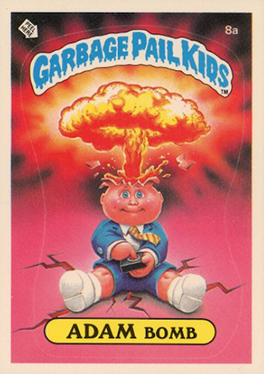
A network paid for an entire season of a cartoon, thirteen finished episodes, then yanked it off the schedule a few days before it was supposed to premiere. The people protesting it, by the director's account, had never watched a single frame. And the show that quietly replaced it that Saturday morning was an extra half-hour of Muppet Babies.
The Garbage Pail Kids cartoon was a 1987 animated series based on the Topps trading cards, produced and directed by Bob Hathcock and co-written by Flint Dille for CBS. All 13 episodes were completed at a cost of around $1.5 million, but after protests from Action for Children's Television, the National Coalition on Television Violence, and a group tied to the American Family Association, plus nervous advertisers, CBS pulled it days before its debut. It never aired in the United States, though it ran overseas and reached DVD in 2006.
A cartoon built from the most banned toy of the decade
By 1987 the Garbage Pail Kids were a phenomenon and a target. The Topps trading cards, gross-out parodies of Cabbage Patch Kids, were already being pulled from some schools. Turning them into a Saturday morning cartoon meant softening them for broadcast standards while keeping the anarchic spirit that sold the cards. The show followed a group of gross-looking kids, Split Kit, Elliot Mess, Terri Cloth, Patty Putty, and Clogged Duane, who could transform into their Garbage Pail identities and, despite the ick, help people. Between stories it ran fake commercials, jokes billed as "Garbage Pail Groaners," and a segment called "Would We Lie to You?"
The crew knew the material had to be dialed back. "We could not use the really gross stuff," director Bob Hathcock said. The compromise did not save it.
Thirteen episodes, finished for nobody
The production was substantial. Hathcock and his crew spent roughly $1.5 million and completed all 13 episodes. The voice cast leaned on Canadian talent who would become animation mainstays: Tara Strong, credited then as Tara Charendoff, voiced Patty Putty, and Cree Summer, credited as Cree Summer Francks, voiced Clogged Duane. The writers' room was deeper than the property's reputation suggested. Among the credited writers was Linda Woolverton, who a few years later would write Disney's Beauty and the Beast and The Lion King.
The show was far enough along that when the axe fell, the producers made an unusual call. Rather than stop mid-stream, they let Hathcock finish. "We were so close to being finished that it made more sense to get them in the can for possible future use," he recalled. So the series was completed after it had already been killed, a full season of television made for a country that would never see it.
The days before the premiere
CBS had promoted the show heavily heading into the 1987-88 season. Then, a few days before its debut, it vanished from the schedule, replaced by an expanded 90-minute block of Muppet Babies. The grid it vanished from is on the fall 1987 Saturday morning lineup, where the expanded Muppet Babies block that took its place sits at the center of CBS's morning.
The pressure had come from several directions at once. CBS removed the series following protests from Action for Children's Television, the National Coalition on Television Violence, and the Christian Leaders for Responsible Television, a group tied to the American Family Association. The charges were specific: that the show ridiculed the disabled, that it glorified violence, and that it amounted to a program-length commercial for the trading cards. Advertisers got skittish too. Nabisco, McDonald's, and Crayola pulled out, some under pressure from the interest groups and some simply because they had not been able to pre-screen the episodes. A number of CBS affiliates had already signaled they would not carry it.
"They never saw a frame of film"
Hathcock's account of the cancellation is blunt, and he has told it the same way for years. "There was a boycott in the Bible Belt against the cards, network, and advertisers and this caused CBS to chicken out and pull the show before it aired and before anyone saw a frame of film," he said. "We made 13 episodes."
The heart of his frustration is that the protest, in his telling, was never actually about the show. "The protest was about the cards, and they never saw a frame of film," Hathcock said. "If they had seen the show without prior knowledge of the cards, there would have never been a problem." The cartoon, softened for CBS, was being judged on the reputation of the toys it was based on.
CBS told a different story. The network's public explanation put the decision inside the building, not in the mailbags of pressure groups. "CBS is well aware of a variety of pressure groups that contacted the network to voice their concern," the network said. "CBS has never reacted to pressure from groups in programming decisions. Basically, it was an internal decision. We had all the best intentions of being able to translate the cards into a program but it didn't work. The fit just wasn't right."
A second life everywhere but home
Killed in America, the show simply aired somewhere else. It ran in the United Kingdom in 1988, with episodes debuting that June, and in much of Europe, Australia, and the Caribbean. American audiences finally got a legitimate look almost two decades later, when the complete series was released on Region 1 DVD in 2006. The thing built for a Saturday morning that never came eventually found its way home on a disc.
How the telling has grown over the decades
- 1987 to 1988, the vanishing. In real time, the story is mostly an absence. The show is promoted, then quietly pulled and swapped for Muppet Babies. The public narrative is set by the protest groups and the trade press, not by the people who made it. The competing official line, that this was an internal call about a program that simply did not work, dates to this period.
- 2016, Mental Floss. The makers' side gets its fullest telling in an oral-history-style piece, where Hathcock lays out the budget, the completed 13 episodes, the toned-down content, and his core grievance that the critics never watched the show.
- 2019, Cartoon Research. Animation historian Jim Korkis republishes Hathcock's account alongside the CBS statement, putting the two irreconcilable versions on the same page.
- The ongoing retrospectives. As the property cycles back through movies and reboots, outlets keep returning to the 1987 cartoon as the great could-have-been, and Hathcock's telling has stayed consistent across every retelling, most recently in coverage as late as 2025.
The drift is the reason itself. To the director, CBS lost its nerve under a boycott aimed at the cards, not the cartoon, from people who had seen neither. To CBS, no pressure group moved the needle and the show was cut because it did not work as television. Both cannot be fully true. The dates are solid: promoted for fall 1987, pulled before air, finished anyway, aired abroad, on DVD by 2006. Why it died is the part that still has two authors.
The honest bottom line
The Garbage Pail Kids cartoon was, by design, a Saturday morning ad for a line of trading cards famous for grossing out parents, and CBS knew exactly how radioactive that was when it commissioned it. The network spent real money, got cold feet, and buried a finished show rather than defend it. Strip away the mystique and it is a program that was too calculated for its own good, killed by the very controversy that made the cards valuable. What makes it worth remembering is the shape of the thing: a complete, unaired season of American television, made by future heavyweights, pulled by a network that would not say plainly why. It is the clearest case study the decade produced in how a moral panic, a nervous advertiser, and a skittish network can erase a show before a single child ever gets to decide whether it is any good. The Real Ghostbusters fought the same battle from a bigger budget: a cartoon that kept getting told to be less of itself, by people who were not in the room when the audience showed up.
Sources
- Mental Floss, "Trash for Cash: An Oral History of Garbage Pail Kids". Carries director Bob Hathcock's account of the animated series verbatim, and the cancellation of the CBS cartoon before a single episode aired. Read in full.
- Cartoon Research, "Animation Anecdotes #397," Jim Korkis, January 11, 2019 (Hathcock's quotes and the CBS statement, side by side).
- SlashFilm, "Why CBS Canceled Its Garbage Pail Kids Cartoon Before A Single Episode Aired," Witney Seibold, November 20, 2025 (Hathcock, sourced to the 2016 Mental Floss oral history).
- Flint Dille, The Gamesmaster: My Life in the '80s Geek Culture Trenches (2020), and his 2020 author talks (co-writer and developer on the series; corroborating teller).
- Wikipedia, "Garbage Pail Kids (TV series)" (production credits, cast, the 1987-88 scheduling, the protest groups and advertisers, international airings, and the 2006 DVD, cross-checked).
For the stuff that actually aired, the couch takes all comers. More show stories live at /full-story/. Related: the full story of Mighty Mouse: The New Adventures and the full story of You Can't Do That on Television. BobbyAndJason.com covers the trading cards the cartoon came from in Garbage Pail Kids: The Cards That Got Banned From School.
Frequently asked
Why was the Garbage Pail Kids cartoon banned?
It was not banned by the government; CBS pulled it. Days before its 1987 premiere, the network dropped it after protests from Action for Children's Television, the National Coalition on Television Violence, and a group tied to the American Family Association, which argued it ridiculed the disabled, glorified violence, and was a commercial for the trading cards. Advertisers including Nabisco, McDonald's, and Crayola also backed out.
Why did the Garbage Pail Kids cartoon never air in the US?
CBS removed it from the 1987-88 Saturday morning schedule a few days before its debut and replaced it with an expanded Muppet Babies. All 13 episodes had been completed, but none aired in the United States.
Did the Garbage Pail Kids cartoon ever air anywhere?
Yes. It ran in the United Kingdom in 1988, as well as in much of Europe, Australia, and the Caribbean. The complete series was released on DVD in Region 1 in 2006.
How much did the Garbage Pail Kids cartoon cost?
Director Bob Hathcock has said it cost around $1.5 million, and the producers let him finish all 13 episodes even after CBS canceled it, reasoning it was worth having a complete show for possible future use.
Who made the Garbage Pail Kids cartoon?
It was produced and directed by Bob Hathcock and co-written and developed by Flint Dille, for CBS. Future Beauty and the Beast writer Linda Woolverton was among the writers, and Tara Strong and Cree Summer were among the voice actors.
Was the cartoon as gross as the cards?
By the director's account, no. Bob Hathcock has said the crew "could not use the really gross stuff" for broadcast, and argued the protesters judged the show on the cards' reputation without ever watching an episode.