The Full Story of the Care Bears Cartoon
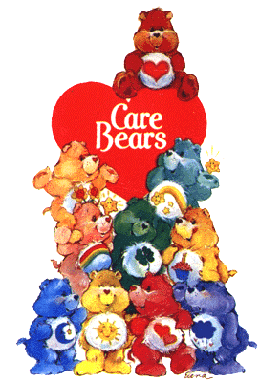
A freelance artist stared at a pencil sketch of a bear, had no idea what to do with it, and on impulse flopped a heart onto its stomach. A few years later a Canadian animation studio on the edge of bankruptcy bet its survival on those bears, rigged the audition it used to win the job, and once paid a crew of unpaid overseas animators twenty thousand dollars in Korean won just to get its own artwork back. The cuddliest cartoon of the decade has a surprisingly desperate backstory.
The Care Bears began in 1981 as greeting-card characters painted by artist Elena Kucharik for American Greetings, co-created with Linda Denham, and were engineered from the start as a licensing line of cards, plush toys and eventually screen properties. They reached television through the 1983 and 1984 specials, then The Care Bears Movie in 1985 from Canada's Nelvana, then the syndicated Care Bears series that fall and The Care Bears Family on ABC from 1986 to 1988. The movie's success rescued Nelvana from closing and made the bears a phenomenon.
The heart on the bear's belly
The single most important design decision in the whole franchise was an accident of instinct. Elena Kucharik was, as she told Cleveland Magazine in 2017, a young freelancer with big ambitions. "I was 24 and freelancing, trying to establish myself as a cartoonist. I wanted to be the next Charles Schulz," she said. American Greetings, riding high on Strawberry Shortcake and hunting for a follow-up, called her in. "I got a phone call back in 1981 when I was freelancing for American Greetings. They needed some preliminary sketching and drawings. I was living in Connecticut by then, and I remember faxing the first pencil sketches."
Then came the moment that defined the line. "I'm sitting here looking at a simple pencil sketch of a bear and thinking, What in the hell am I going to do with the bears?" Kucharik recalled. "Something in my head just took those graphics and flopped them over on the bear's stomach. I drew that heart on that bear. Boom! The clouds opened up and the sun shined." The idea of a symbol on the belly, a rainbow, a shamrock, a heart, became the identity of every Care Bear, and it was novel enough to patent. "The patent was for the application of putting graphics on a bear's stomach," Kucharik said. "Nobody had ever done that before." The characters went back and forth in development, "making the bears shorter and pudgier," until, she said, "they said, 'We have the bears.'"
Engineered to sell, from day one
The tidy version of the story is that beloved little card characters happened to become toys and then a show. The record is more calculated than that. The Care Bears were conceived from the outset as a cross-product licensing line, what a 1986 Pantheon essay on children's television called "the Shortcake Strategy," after American Greetings' earlier Strawberry Shortcake success. The greeting-card company's design arm, Those Characters From Cleveland, was strategizing with the toy maker Kenner before the first bear shipped, precisely because Kenner "wanted to get into the plush business." Cards, plush and a whole merchandising program were planned together, in secret, under the working title that stuck: Care Bears.
The launch was a business event, not a fan discovery. On September 24, 1982, American Greetings unveiled the Care Bears to the Society of Security Analysts in New York City, and Jack Chojnacki, co-president of Those Characters From Cleveland, remembered the internal reaction to the prototype in almost clinical terms. "It had a high aaaaaah factor," he said in 1985. The rollout carried a five to six million dollar advertising budget and a wholesale commitment worth over one hundred million dollars before a single unit had sold. Over 40 million toys and 70 million greeting cards moved during the decade, and the merchandise crossed two billion dollars in sales in the 1980s. The bears were a spreadsheet with fur.
Grumpy Bear, and the people who cared anyway
What keeps this from being a pure cash-in story is that the makers kept smuggling craft and self-awareness into it. The most telling example is Kucharik's own reaction to the relentless sweetness of the lineup. Faced with ten uniformly sunny bears, she pushed back. "As I'm sitting there, looking at all these saccharine honey-sweet teddy bears, I said, 'We need a relief in this bunch,'" she recalled. "'Let's do a counter bear to all this sweetness. Let's do a Grumpy Bear.'" Grumpy Bear, the scowling blue one, exists because the artist drawing the world's most wholesome toys wanted an antidote to her own product. The instinct that a cast needs friction, not just warmth, is the same one that made the shows watchable.
The movie that saved a studio
The Care Bears reached the big screen because a studio needed them to survive. Nelvana, the Toronto animation house run by Michael Hirsh, Patrick Loubert and Clive Smith, had poured almost everything into the 1983 feature Rock & Rule, which failed to find distribution and nearly sank the company. Hirsh has called the stretch that followed Nelvana's "dark years." The Care Bears Movie was the lifeline, and Hirsh won it with a stunt. To beat out competing studios for the job, he staged an audition modeled on the Pepsi Challenge television ads, screening clips he himself had selected. His partners at the toy and greeting-card companies saw exactly what he had done and hired him anyway. "We know you've rigged this against everybody else because you've chosen the clips," Hirsh recalled them saying. "But we like the approach."
The production, directed by Arna Selznick from a screenplay by Peter Sauder, ran eight months on a budget of at least two million dollars and was farmed out across Canada, Taiwan and South Korea, and it was not a smooth shoot. At one point Loubert, Smith and a colleague named David Altman spent three days trying to pry finished layout sketches out of a group of animators who had not been paid, and Nelvana settled the standoff by handing over twenty thousand dollars in South Korean won in exchange for its own artwork. Racing a deadline with the film unfinished, Hirsh could not get usable footage to sell it, so he showed exhibitors a few Leica reels and a handful of completed color shots, which, by his account, was the first time an animated work in progress had ever been screened to buyers. The tactic later became standard; Disney used it for Beauty and the Beast at the 1991 New York Film Festival.
It worked. The Care Bears Movie earned around 23 million dollars domestically and over 34 million worldwide, became the highest-grossing animated film not made by Disney at the time, and pulled Nelvana back from the brink. A greeting-card mascot had saved a real animation studio.
To television, and back to Nelvana
The screen Care Bears actually predate the movie in short form: the syndicated specials The Care Bears in the Land Without Feelings (1983) and The Care Bears Battle the Freeze Machine (1984), produced around the toy line, established villains like Professor Coldheart. The weekly series arrived in the movie's wake. In fall 1985, DIC Enterprises produced the first Care Bears television series for syndication, an eleven-episode run that stitched together the specials' villains and the movie's Forest of Feelings into one continuous world. Then the studio that had saved the franchise took the show back: Nelvana produced The Care Bears Family, which ran on ABC from 1986 to 1988 across three seasons and more than seventy episodes, introduced the wizard No Heart, and, unusually for a toy cartoon, let its episodes touch real feelings, including conflict and depression, through the characters themselves.
How the telling has grown over the decades
- 1985, launch-era press. Contemporaneous coverage captures the business machine, the "high aaaaaah factor" pitch, the multimillion-dollar advertising commitment, and the specials and toy line, framing the Care Bears as the decade's defining licensing play.
- 1996 and after, Nelvana's own history. As the studio's story gets told and retold, Hirsh and his partners supply the production drama behind the movie: the "dark years," the rigged audition, the unpaid animators paid in won, and the work-in-progress screening that saved the sale.
- 2017, Cleveland Magazine. An oral history assembles the creators' voices, above all Kucharik's, on the belly-badge invention, the shorter-and-pudgier redesigns, the patent, and Grumpy Bear as a deliberate corrective to the sweetness.
The drift here is not between two contradictory eyewitnesses; it is between the brand's own tidy legend and the fuller record. American Greetings' history tells it as characters that were simply created and beloved. The people who actually made the things describe something less innocent and more interesting: a licensing line engineered with a toy company in the room from the start, and a movie made under financial duress by a studio trying not to die. Both are true. The bears were a product, and the product was made by people who, given the chance, could not help caring about it.
The honest bottom line
By the standard critique of 1980s children's television, the Care Bears are the perfect villain: a program-length toy commercial, a licensing line dressed as a story, characters reverse-engineered from a greeting-card symbol to move plush off shelves. All of that is accurate, and the makers barely bother to deny it. What the cynicism misses is the craft and desperation underneath. A young artist's impulsive heart on a bear's belly turned out to be a genuinely good idea, good enough to patent and to build a world on. A nearly bankrupt studio treated a toy movie as the thing that would decide whether it existed, and made it well enough to become the biggest non-Disney animated hit of its day. The Care Bears were built to sell, and they did. They also, almost in spite of themselves, got made with care. He-Man was built on the same assembly line, a toy company's need first and a story second, and the story outlasted the toys for exactly the same reason.
Sources
- Cleveland Magazine, "The Bear Truth", Colleen Smitek, 2017 (Elena Kucharik and the creators on the belly-badge invention, the redesigns, the patent, and Grumpy Bear).
- Wikipedia, "The Care Bears Movie" (Nelvana's "dark years," the rigged audition and Michael Hirsh quote, the unpaid-animators episode, the work-in-progress screening, budget and box office; drawing on Nelvana's published history).
- Wikipedia, "Care Bears" and "Care Bears (TV series)" (the 1981 origin, the 1982 launch, the specials, and the 1985 and 1986 television series; cross-checked).
- Orlando Sentinel, "The Care Bears - Plush Love for Sale", April 16, 1985. Carries Jack Chojnacki's launch-era account of the February 1981 desk meeting and his "It had a high aaaaaah factor" quote verbatim. Read in full.
Reading about it is half the fun, sitting back down in front of it is the other half. More show stories live at /full-story/. Related: the full story of the Smurfs on NBC and the full story of Disney's Adventures of the Gummi Bears. BobbyAndJason.com covers the toy line in Care Bears: The 80s Toy That Wore Its Heart on Its Belly.
Frequently asked
How did the Care Bears start?
Artist Elena Kucharik created them in 1981 for American Greetings, drawing a bear with a symbol on its belly for a greeting-card line, co-created with Linda Denham. They were designed from the outset as a cross-product line of cards, plush toys and eventually screen characters.
Who created the Care Bears?
Elena Kucharik was the lead artist and co-creator, with Linda Denham, working through American Greetings' design arm, Those Characters From Cleveland. Early concept work also involved Muriel Fahrion, and plush designer Susan Trentel built the first toys.
When did the Care Bears cartoon come out?
The animated Care Bears began with TV specials in 1983 and 1984, followed by The Care Bears Movie in 1985, a syndicated Care Bears TV series in fall 1985, and The Care Bears Family on ABC from 1986 to 1988.
Is it true The Care Bears Movie saved Nelvana?
Yes. The Toronto studio Nelvana was nearly bankrupt after its 1983 film Rock & Rule failed. The Care Bears Movie, made under tight budgets and deadlines, became the highest-grossing non-Disney animated film of its time and rescued the company.
Were the Care Bears just a toy commercial?
Largely, yes. They were engineered as a licensing property with a toy company involved from the start, during an era of deregulated children's television full of toy-driven cartoons. The makers, though, brought real craft to them, including touches like Grumpy Bear, added as a deliberate counterweight to the sweetness.
Why does each Care Bear have a symbol on its belly?
Because that was the founding idea. Elena Kucharik spontaneously placed a graphic symbol, starting with a heart, on a bear's stomach, and the "belly badge" became each character's identity. American Greetings patented the concept of applying graphics to a bear's stomach.