The Full Story of Solid Gold
A syndicator locked the buyers from competing stations in one hotel room and asked them whether they could afford to walk out without his package. The most famous dance troupe on American television existed because the singers with the week's biggest records would not fly back to Los Angeles every seven days. And the whole thing was shot twice at once, as a two hour special and as five half hours, mapped across four walls of index cards that were photographed every night so nobody could move them.
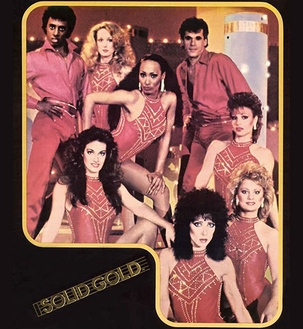
Solid Gold was a syndicated music show created by Al Masini and developed by Bob Banner, produced by Brad Lachman Productions with Operation Prime Time and Paramount. It premiered in September 1980 with Dionne Warwick hosting and ran until July 23, 1988, eight seasons and 332 episodes. Its countdown format was a scheduling problem before it was a hit, and the Solid Gold Dancers were the solution to it.
The show that existed because stations were tired of reruns
In 1980 a local station that was not carrying a network feed carried somebody else's leftovers. Louis J. Horvitz, who directed the show, laid out the landscape in his Television Academy Foundation interview: "the reruns went to the syndicated local stations in LA, KTLA, WGN, Chicago, KTTV, Channel 11, KCOP, Channel 13, and you saw reruns of the network shows."
The man who moved against that was Al Masini, who ran the station rep firm TeleRep. "A guy named Al Masini got it in his head, I think we should do first run programming for syndication made only for them, not for the networks, of which he created then and wanted to create a series called Solid Gold," Horvitz said. "He left the networks out because the syndicators, they were tired of kind of rerunning everybody else's material, but that was all the budget that they had with their limited markets."
Richard Frank, who was running all of television at Paramount, tells the same origin from the studio side and refuses to hand the credit cleanly to anyone. "I guess it's like all things, a lot of people want to take credit for it," Frank said in his Television Academy Foundation interview. He placed Masini and the Taft group at the center of it, then added: "the idea came out of a meeting we had, whose it was. I'll give Al credit for saying we should do that. And then we then followed up and put the show together."
Putting it together meant fighting the studio's own paperwork. "It required us to figure out how to shoot weekly, shoot with a different shooting schedule than the Paramount Guild agreements would agree to, because it's really written for a movie company," Frank said.
Then Masini sold it in a room. Horvitz described the pitch: "he invited the syndicator buyers from all of the local stations to Los Angeles, and he put them all in the Beverly Hilton Hotel that Merv owns, and he said, this is my concept. It's called Operation Prime Time. It's just for you guys. You're the buyers. You're all here. You're all in competitor markets." The close, in Horvitz's telling, was one sentence: "here's what I've got. Can you afford to leave this room without buying my package?"
The record shows a one off special came first. A program honoring the previous year's biggest records, titled Solid Gold '79, was hosted by Dionne Warwick and Glen Campbell, and the response to it led to a weekly series for the fall of 1980.
Why there were dancers at all
The single best answer to why Solid Gold looked the way it looked comes from Frank, and it is a logistics answer, not an artistic one. The plan had been simple and the plan collapsed on contact.
"In the best circumstances, everybody who did the top ten shows would come on your show that week and you wouldn't have to do anything else. So that's where we started," Frank said. "We said, oh, we have a countdown show and we're shooting it. Why wouldn't this band come on or this singer? Well, you find out very rapidly that songs stay there week to week so you don't necessarily want to have them every week and these people do work all over the country and the world doing their performances. So we had to find something else."
The first patch was to have the host sing the other numbers. That broke too. "So the idea then started, well, why don't we have somebody sing the other songs, do a cover of the songs? That was a good idea and who could do that? Well, Dionne Warwick, who could certainly walk in each week and sing something. But then do you want to have five Dionne Warwick songs? So you don't want to do that."
Which left the thing the show is remembered for. "So maybe we can dance the numbers in between and that's where we came up with the Solid Gold Dancers, which became probably more famous than the whole show," Frank said.
Horvitz got the chair, and he knew what to do with a music show because he had come off Don Kirshner's Rock Concert. Frank remembered the hire: "the first director we let do this was Lou Horvitz, who now has become one of the great directors doing the Academy Awards..." Horvitz, for his part, called it the project he was proudest of, and the reason was control. "I was given full rein to light it, to shoot it, to create it."
He also inherited Masini's other trick, the one that made the show pay twice. A syndicator could afford one two hour show a week or five half hours to fill a daily strip, so Masini had both shot at the same time. "It was built as a two-hour show but it was also cut up into five half-hour shows," Horvitz said. He ran it off a room of cards, one wall per version, and he did not trust anyone near them: "I would make people take Polaroids of the boards when I left at night." Move a card and the edit stopped fitting.
Building the troupe
Kevin Carlisle was hired to choreograph before the show had aired. "It was just starting up. It had not been on the air yet, so they were looking for, you know, producers, directors choreographers, costumers," he told the Television Academy Foundation in an interview recorded on October 3, 2017. The brief he got was plain: "That it was going to be a countdown show of the top songs on radio then."
He wanted a company, not a casting call every week. "I wanted dancers who wanted to be dancers doing television," Carlisle said. He settled on eight, and he is blunt about the arithmetic: "I really only need two guys and then the rest I would like to be females."
He is equally blunt, and then immediately uncomfortable, about the standard the women were held to. Asked why, Carlisle said they "didn't necessarily need to be really, really good. They just needed to be really, really attractive and look good in Bob Mackie's clothes." When the interviewer asked whether Bob Mackie designed for the show, Carlisle walked the name back and reframed the point: "No, but I may have just said that because what I meant was whoever the costumer was needed to be aware that dance was part of it."
The troupe acquired a lead without anyone deciding to give it one. Darcel Wynne became the principal dancer, and Carlisle's account of why is about recognizability rather than technique: "she just had a style and a look that was all her own." Asked whether a principal had been the plan, he said no. "It just evolved that way."
His working method was to build backward. "I would usually do a finale first because my feeling was I have to know where I am headed and then head there," Carlisle said. Everyone was in the finale, on purpose: "I wanted them all to feel that they were a major part of it. Not that they, I didn't want them to feel that they were just the background."
Two shows every ten days
Anita Mann had been Carlisle's assistant years earlier, was offered the pilot first, and lost it to a family crisis. "I had a personal... something come up in my personal life that I couldn't... I had to quit," she told the Television Academy Foundation. She came back to the show later and stayed for years, and her account of the workload is the most concrete production record anyone has left.
"We shot two shows every 10 days," Mann said. "It was about 17 numbers that I had to teach a week." The math came from the format: the countdown numbers the dancers carried, plus the guest acts. "I couldn't possibly do 17 numbers myself. I really couldn't. I mean, I could, but they wouldn't be very good."
Her solution was to hand the routines out. She would assign eight counts to individual dancers and assemble the result. "I saw that the dancers loved to make up steps," Mann said, and the effect was that "the dancers were really part of the whole process on that show." Her one line summary of the job's temperature: "every week was like an audition."
The auditions themselves were their own event. "One time I needed one girl. And 1,500 came. We did it at Griffith Park," Mann said. "And that's how hard it was to be a Solid Gold dancer. Everyone, what I loved so much is everyone wanted to be. It was the job of the 80s if you were a really good dancer."
What she screened for was not what viewers assumed. "The first thing I look for is attitude," Mann said. Then speed, because tape costs money: "for TV, you can't take the time to worry if they're going to get the routine and clean and on camera." And she rejects the premise that the troupe was simply born beautiful: "everyone said, oh, the Solid Gold dancers were so beautiful. But they walk in a room and they look the same as everyone else. It's how they present themselves that they become so beautiful."
The physical cost was real and she names it. "The girls wore four-inch heels. I mean, and had to dance in them. Not just walk and go to a party." The hardest part, she said, was neither: "the hardest part was memory. I mean, like how much could you put into your brain and still dance?" The dancers were shot last, after the guest acts cleared: "if we don't start shooting until midnight, they've got to look like it's, you know, 8 o'clock in the morning."
And because the show followed the same records week after week, the choreography had to keep moving when the music did not. "Can I say the word physical?" Mann said. "If I had to do Olivia Newton-John's physical one more week we were hysterical." Her fix was to go hunting in the lyric for anything she had not used yet: "I would just look for one lyric that would give me a different approach to it."
Even Darcel Wynne's most recognizable moments were not always the ones written for her. "I would choreograph Darcel but half the time it would never end up on camera," Mann said. "She would forget it and just do her own thing and we said great go for it."
The letters about the costumes
Solid Gold was not a network show, and Mann is careful about that distinction when she talks about interference. The pressure that reached her on this program came as mail. "I did get letters that our costumes were too sexy," she said. She declined to name the senders, describing them as "very famous religious people on television and stuff who said I'm going to basically burn in hell because I was exposing women's bodies in a certain way."
Her answer was a working choreographer's answer. "I think the pride of dancing, you can't dance with a full dress on. I mean, you can, but not freely all the time."
She does not claim the show was censored the way network programs she had worked on were. In the same interview she recounts network incidents from the 1960s, on a Petula Clark special and on the Smothers Brothers hour at CBS, and then separates them from this job. Of Solid Gold she says only this: "costumes had to be a certain way. And I was stifled in some respects."
How the telling has grown over the decades
- 2011 and 2012, Television Academy Foundation. The archive interviews the executives and the crew. Robert Dickinson's session covers the lighting design that won an Emmy. Richard Frank's session supplies the origin from inside Paramount, the Guild scheduling problem, and the structural reason the dancers exist. Frank also declines to award the idea to one person: "a lot of people want to take credit for it."
- 2013, Television Academy Foundation. Louis J. Horvitz adds the sales mechanics that no studio account contains: the Beverly Hilton room, the Operation Prime Time pitch, the closing line to the buyers, and the two hour show that was simultaneously five half hours held together by walls of cards and nightly Polaroids.
- 2017, Television Academy Foundation. Kevin Carlisle, interviewed October 3, gives the casting logic of the troupe, the two men and six women split, the accidental elevation of Darcel Wynne, and the candid hiring standard he then partly retracts inside the same answer.
- 2018, Television Academy Foundation. Anita Mann supplies the labor record: two shows every ten days, seventeen numbers a week, the Griffith Park audition, the midnight call, the costume letters, and the collaborative method of farming out eight counts to the dancers themselves.
- 2020, GRAMMY.com. The Recording Academy's History Of series marks the show's fortieth anniversary and preserves Dionne Warwick's opening words from the debut episode: "Welcome to 'Solid Gold!' Starting right now and for every week to come, we're gonna bring you the biggest hit records in the country, some by the people that made them famous. So get ready for a lot of comedy, some real hot dancing and many surprises."
The drift is worth naming, because two of the show's own choreographers do not describe the same employment history. Asked in 2017 whether he stayed with Solid Gold for the entire run, Carlisle answered yes. Mann, in 2018, says Carlisle did the pilot and the early seasons and then "a year and a half later, Kevin had to leave the show for some reason. I don't know," after which she was brought in during the middle of the second season and stayed five years. The Television Academy Foundation's own index of her interview describes her as becoming involved in the middle of the second season. Neither has publicly reconciled the two accounts, and this page does not merge them.
The paper record wobbles too, in a smaller way. The archival entry for the series gives a premiere date of September 13, 1980, while the Recording Academy's 2020 piece dates the debut episode to September 15, 1980. Both dates sit in the record as written.
One more caution belongs here. Mann's account of network interference is frequently compressed by retellings into a claim that Solid Gold itself was censored over race. Her own words separate the eras: the incidents she describes on that subject happened in the 1960s on network variety shows, and what she reports from Solid Gold is mail about costumes and a general sense of being stifled.
The honest bottom line
Solid Gold was a show built around a problem it never really solved. The stars whose records it counted down mostly could not be there, most of what happened on that stage was performed to a recording rather than sung, and the dancing that made the show famous was invented to fill the hole where the artists were supposed to stand. Reviewing it in February 1986, The New York Times called it "the pop music show that is its own parody" and described its routines as "mini-dramas...of covetousness, lust and aerobic toning...". The show's own lead choreographer admitted on the record that the women he hired did not have to be the best dancers in the room. None of that is a defense, and none of it is why people still remember it. What survived is the craft underneath the glitter: eight dancers who each had a different specialty, seventeen numbers a week taught in ten day cycles, a director running two versions of one show off four walls of cards, and a troupe that became more famous than the format that created it. Carlisle's claim for it is modest and probably right. "There's a certain legacy of dance on television," he said. "We set the tone for it and the television audience showed up and responded to it." Club MTV picked up the same format a few years later and stripped out even the dancers, and the fact that the music-on-a-stage model kept getting cheaper without losing its audience tells you it was never the production that people came for. The cheapest version of all kept the studio floor and discarded nearly everything else, which is how a daily show out of a Philadelphia studio held a national cable slot from 1986 to 1992.
Sources
- Television Academy Foundation, The Interviews, Richard Frank interview, part 1 (Solid Gold origin, Operation Prime Time, the dancers as a scheduling solution), posted 2012.
- Television Academy Foundation, The Interviews, Louis J. Horvitz interview, part 1 (Al Masini, the Beverly Hilton pitch, the two hour and five half hour build), posted 2013.
- Television Academy Foundation, The Interviews, Kevin Carlisle interview, part 1, interview recorded October 3, 2017 (hiring the troupe, Darcel Wynne, working method).
- Television Academy Foundation, The Interviews, Anita Mann interview, part 3 (workload, auditions, costume letters, collaboration with the dancers), posted 2018.
- Television Academy Foundation, The Interviews, Robert Dickinson interview, part 1 (lighting design), posted 2011.
- GRAMMY.com, "Explore 'Solid Gold,' The Epic '80s Hit Music TV Show | History Of", Ana Monroy Yglesias, September 15, 2020.
- Wikipedia, "Solid Gold (TV series)" (premiere and finale dates, season and episode counts, production companies, host and announcer chronology, final season format change), cross-checked against the above.
- The New York Times, "Solid Gold Countdown, the 1985 Hit Parade", Jon Pareles, February 25, 1986, page C18, as quoted in the archival record. The Times page itself returned an access error when fetched for this piece, so the review is cited at second hand.
The countdown keeps counting in the room where the music plays. More show stories live at /full-story/. Related: the dance shows of the 80s and the full story of American Bandstand's final decade.
Frequently asked
What was the Solid Gold TV show?
Solid Gold was a syndicated weekly music program created by Al Masini and developed by Bob Banner. It premiered in September 1980, ran for eight seasons and 332 episodes until July 23, 1988, and combined a countdown of the week's biggest records with guest performances, a stand up comedy spot, and its own resident dance troupe.
Why did Solid Gold have dancers?
Because the acts would not come back every week. Paramount television head Richard Frank has explained that the show assumed the artists behind the top records would simply appear, then discovered that records linger week to week and touring performers are not available on demand. Having the host cover the other songs did not work either, so the numbers were danced instead.
Who were the Solid Gold Dancers?
A fixed troupe of eight, six women and two men, assembled by choreographer Kevin Carlisle before the series aired. Darcel Wynne emerged as the principal dancer, which Carlisle says was never the plan and simply evolved. Anita Mann took over the choreography and later brought in dancers with street styles.
How hard was it to become a Solid Gold dancer?
Extremely. Anita Mann has said one open call at Griffith Park drew about 1,500 dancers for a single opening. She screened first for attitude, then for how fast a dancer could learn a routine clean enough for camera, and the women performed in four inch heels, often shooting after midnight.
Who hosted Solid Gold?
Dionne Warwick hosted the first season. Marilyn McCoo took over in 1981 and hosted across several stretches, with Andy Gibb, Rex Smith, and Rick Dees each co hosting or hosting a season. Warwick returned in 1985, and McCoo came back in 1986 alongside Nina Blackwood and Arsenio Hall through the final season.
When did Solid Gold end and why did it change?
The series ended on July 23, 1988. For its final season the format was rebuilt around performances rather than the weekly countdown and the program was retitled Solid Gold In Concert, with the dancers appearing less often as more time went to featured acts.