American Bandstand in the 80s: The Last Decade of the Institution
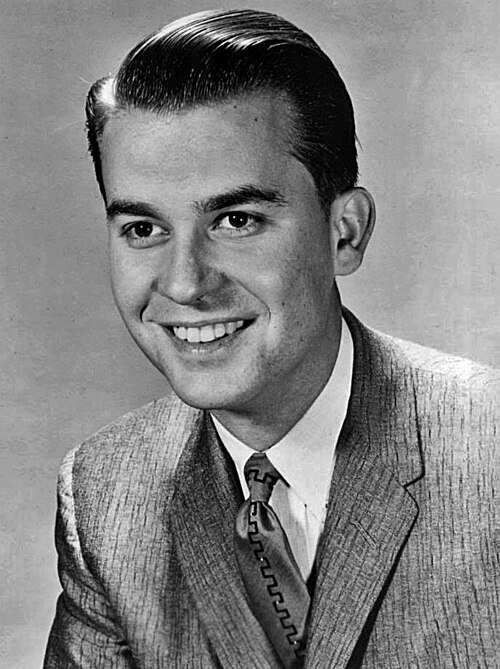
By the end, the longest running show of its kind in American television was being taped outdoors in a theme park in the middle of the day, with no lights, on bare sets, in the heat. Its host had been there since 1956 and had watched the format he invented get taken away from him by a cable channel that did the same thing with videotape. Then he turned it off himself, three months before it would have been on the air in five separate decades, and spent the rest of his life calling that a mistake.
American Bandstand spent the 1980s being made obsolete by MTV, a channel doing its own job with music videos. ABC cut the show to a half hour in 1987, so Dick Clark took it into syndication instead, then to the USA Network in 1989 with a new host. The final episode aired in October 1989, ending a run that began in Philadelphia in 1952. Clark said afterward he had let it go three months too early.
The channel that did Bandstand's job without the kids
The threat did not arrive suddenly. Bandstand had been playing music films for years before anyone called them videos, and Clark made a deliberate choice not to build the show around them.
"We played occasional videos during the course of the show," Clark said in his Television Academy Foundation interview, conducted July 29, 1999. "Michael Jackson's first video debuted on Bandstand, the Beatles Penny Lane, the Strawberry Fields, a couple of others, but we thought it was more interesting for people to watch real human beings in that atmosphere. We didn't embrace the video thing."
That was a defensible read of his own show. Bandstand's product was never really the record. It was the floor: local teenagers dancing on camera, rated and imitated by teenagers at home. A video had no floor and no kids in it.
Then the arithmetic changed. "Years later, as Bandstand disappeared, MTV took over the minds of young people," Clark said. What he objected to was not the competition so much as what the format did to listening. On MTV, he said, the channel "said this is what the song means. It became the director's vision. I never cared for that." His alternative was the older way of hearing a record: "you let your own mind be the movie, not what the director dictated."
Clark also noted the irony that MTV itself kept a Bandstand-style show on the air in one form or another for years, which is to say the format never actually died. It just stopped being his.
ABC wanted thirty minutes
The break with the network came over length. Clark's account is blunt and gives no impression that he agonized over it: "we had taken the show from ABC who wanted it only for a half an hour a week, and I said now I'm gonna syndicate it."
The archival record puts the ABC run from 1957 to 1987 and a syndicated run across 1987 and 1988, produced by Dick Clark Productions. So the show that had been an ABC fixture for thirty years spent a season as a first run syndicated program, sold market by market, which is the same business the rest of the 80s dance shows were already in. In Philadelphia that business had already turned one daily dance show into the next, with Dancin' On Air handing its studio and its format to the cable show that replaced it.
That is worth sitting with. Bandstand did not fail out of network television because nobody watched. It left because the network wanted half as much of it, and its owner would rather sell it himself than shrink it. ABC's own fall 1984 Saturday grid, and what the network did with the afternoon slot Bandstand had held, is on the fall 1984 Saturday morning lineup.
The parking lot at Universal
Syndication did not hold either. After the syndicated run ended, the record has the show moving to cable on the USA Network in 1989, with comedian David Hirsch taking over as host and Clark staying on as executive producer.
Clark's description of the last phase is the most quoted thing he ever said about the show's ending, and it is not nostalgic. "It was being done at an amusement park, Universal, in a park, in the daytime, with no lights and bare sets, and then hotter than the hinges of Hades, and it was a tough grind."
Read that against what Bandstand had been: a studio, a controlled floor, a national network slot, a host who was the most recognizable man in American music television. It finished as a daytime outdoor shoot at a tourist attraction.
"Let it go"
What ended the show was not a cancellation notice. It was Clark deciding he did not want it remembered in that condition.
"I ... thought of the Bandstand as one of my kids," he said. "I got three kids. This is my fourth kid." Looking at what the cable version had become, he made a call: "I said I really don't want it to be remembered that way." He and the network held a mutual option. He declined to continue.
Then comes the part he never softened. "I made a big mistake," Clark said. "It was October of 1989. I could have kept it on another three months, and then it would have been on in the 50s, 60s, 70s, 80s and 90s. We missed the 90s by three months, because I was of a mind to say let's not remember it this way. This is sad."
A show that had run since 1952 came within one quarter of touching five decades, and the man who owned it turned it off out of something like dignity, then regretted the timing for the rest of his life.
What it left behind
The most useful thing Clark ever said about the 80s dance show boom is also the most deflating, and it explains why there were so many of them.
Asked whether Bandstand had imitators, he said: "Yeah, one time there were 60 or 70 copies, because it was inexpensive. All you needed was a disc jockey, some records, and some kids."
That sentence is the business model of an entire genre. Every local and syndicated dance show of the era, including the ones that outlived Bandstand's network run, was built on the same cheap and durable idea. The show itself started local, on WFIL-TV in Philadelphia in 1952, and Clark took it west: "we moved from Philadelphia to LA in 1964." The city's own local dance show lineage continued after Bandstand left, and that history is covered in the archive.
How the telling has grown over the decades
This section carries a disclosure, because this lane's usual method did not fully survive contact with the sources.
- July 29, 1999, Television Academy Foundation. James Moll interviews Dick Clark in Burbank. This is the load-bearing maker telling for the show's final decade and effectively the only one reachable for this piece. It supplies the ABC half hour demand, the syndication decision, the cable move, the Universal shoot, the mutual option, the October 1989 shutdown, the missed fifth decade, and Clark's objections to the video format. The clips were posted publicly years later, which is why this account is frequently dated to the posting year rather than to 1999.
- 1997, Clark's own book. Dick Clark's American Bandstand, written with Fred Bronson, is a first person retrospective and would be the natural second telling to diff against 1999. It could not be used here. The Internet Archive copy is access restricted and lending only, and this piece was not going to sign in to reach it. Its contents are therefore listed as unread, not as agreeing or disagreeing.
- 2024 to 2026, the online record degrades. The main Wikipedia article on the show currently carries two maintenance banners, one for original research dated September 2024 and one flagging a partly AI generated rewrite dated March 2026. Much of the detailed 1987 to 1989 chronology circulating on other sites traces back to that article. The dates used above are the ones its infobox and Clark's own account agree on, and nothing was taken from the flagged prose that Clark does not independently corroborate on tape.
The honest summary: the drift here is not between makers who remember differently, because only one maker's account of these years was reachable. The drift is between Clark's own words and an internet record about him that is getting less reliable rather than more.
The honest bottom line
American Bandstand in the 80s was a show being slowly outmoded, and most of what is written about that decade of it is either sentimental or secondhand. The format had a real weakness that MTV exposed: a record no longer needed a room full of dancing teenagers to reach teenagers, and a channel that ran videos around the clock could do the job cheaper and at any hour. Bandstand's answer, keeping actual human beings on the floor, was the right instinct about what the show was and the wrong bet about what the decade wanted. It got cut to a half hour, sold off, moved to cable, handed to a new host, and finished in a theme park in the daytime heat. What redeems the ending is that the man who owned it refused to let it grind on in that state, and then had the honesty to call that decision a mistake on the record. The floor he built lasted 37 years, spawned by his own count 60 or 70 copies, and taught television a lesson it never unlearned: put some kids, some records, and one host in a room, and you have a show.
Sources
- Television Academy Foundation, The Interviews, Dick Clark, interview conducted by James Moll on July 29, 1999 in Burbank, CA. Clip segments on the show's final decade and on MTV were transcribed for this piece; the interview date is stated on the archive's own interview page.
- Wikipedia, "American Bandstand" (network chronology, run dates, host list, Dick Clark Productions credit). Reliability note: this article currently carries an original research banner dated September 2024 and a partly AI generated banner dated March 2026. It is used here only for chronology that Clark's 1999 interview independently corroborates.
- Dick Clark with Fred Bronson, Dick Clark's American Bandstand, 1997. Listed as a known first person account that was NOT consulted: the Internet Archive copy is access restricted and lending only.
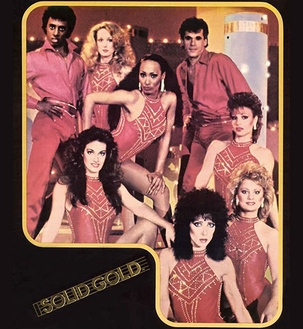
Or skip straight to the room where the screens are on. More show stories live at /full-story/. Related: the dance shows of the 80s and the full story of Solid Gold.
Frequently asked
When did American Bandstand end?
The final episode aired in October 1989 on the USA Network, ending a run that began in Philadelphia in 1952. Dick Clark, who owned the show and had hosted it since 1956, declined to continue under a mutual option rather than keep taping it in the condition it had reached.
Why did American Bandstand end?
Because its owner stopped it. ABC wanted the show cut to a half hour in 1987, so Clark took it into syndication, then to cable. By 1989 it was being taped outdoors at Universal in the daytime, which Clark described as a tough grind, and he decided he did not want the show remembered that way.
Did Dick Clark regret ending American Bandstand?
Yes, and he said so plainly. Three months more would have put the show on the air in the 1950s, 60s, 70s, 80s and 90s. "We missed the 90s by three months," he said, calling the decision a big mistake.
Who hosted American Bandstand at the end?
Dick Clark hosted from 1956 through the network and syndicated runs. For the 1989 cable version on the USA Network, comedian David Hirsch took over as host while Clark remained as executive producer.
Did MTV kill American Bandstand?
Not by itself, but it took the audience. Clark had chosen not to build Bandstand around music videos, believing viewers preferred watching real people dance, and he later said that as Bandstand disappeared, MTV took over the minds of young people.
How many American Bandstand imitators were there?
By Clark's own count there were once 60 or 70 copies of the format, and his explanation was economic rather than flattering: the show was inexpensive, and all it required was a disc jockey, some records, and some kids.