The Full Story of The Great Space Coaster
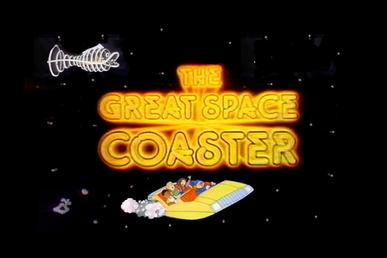
A children's show built around a green puppet newscaster who refused to pronounce the letter N correctly won a Peabody Award, made 250 episodes, and then effectively disappeared, with no reruns and no home video. The three teenagers at the center of it were all in their twenties, and one of them was 25 on the first day. And nearly forty years later the puppeteer who performed the gnu spent his retirement savings buying the show back from a company in Germany, because the only surviving copies were sitting on two inch tape that had begun gluing itself together.
The Great Space Coaster was co-created by Kermit Love, Jim Henson's Muppet designer and the builder of Big Bird, and puppeteer Jim Martin, who performed Gary Gnu. It ran in first-run syndication from 1981 to 1986, 250 episodes across five seasons, produced by Sunbow Productions and distributed by Claster Television. It won a Peabody Award in 1983 and a Daytime Emmy for its title animation. It never got a home video release, and Martin has spent years since buying the rights and digitizing the rotting masters.
Three kids on an asteroid, none of them kids
The premise was strange enough that the people who sold it were not sure how it sold. Three young musicians, Francine, Danny and Roy, ride a roller coaster shaped spacecraft piloted by a runaway clown named Baxter to an asteroid populated by wisecracking puppets. Each episode carried a lesson, a short film, a song, and a newscast delivered by a gnu.
Chris Gifford, who played Danny and who later became one of the creators of Dora the Explorer, put the absurdity plainly when the cast came back together on the radio show Just My Show in September 2010. "I mean, the premise is three kids go up to an asteroid and are part of a band that's going to interact with these puppets, and how they ever sold this kind of," he said, breaking off, before landing the point from inside the industry: "I'm in kids' TV now, and the idea that someone would come to me with this sort of premise now is just... You just never want to buy into it, and yet, somehow, it struck a chord and really succeeded with a lot of kids."
The kids were not kids. "The three, you know, kids, as they called us, all of us over 20," Gifford said. "Some of us older than 20, I guess." Emily Bindiger, who played Francine, was more exact in a 2013 interview with the blog The Peverett Phile: "I was 25 when we first started the show."
Getting the parts was not casual. "Emily and I and Ray, we had long, long auditions to get on this show," Gifford said, and the pitch to them was flattering: "they talked to us about how we were the stars of this new show." Singing was not optional. Asked whether she had to sing at her audition, Bindiger answered: "Absolutely. It was essential."
Kermit Love's other show
The show came out of the Henson orbit without being a Henson show. Kermit Love had designed and built Big Bird and worked closely with Jim Henson on Sesame Street. Jim Martin was a Pittsburgh puppeteer who had spent nearly eight years performing shows for the city's parks department after college.
The introduction that changed Martin's career came from inside Sesame Street. Caroll Spinney, who performed Big Bird and Oscar the Grouch, saw Martin's work and sent him to Love. "Kermit was working on a show," Martin recalled in a September 2019 interview with Cris Alvarez. "He had a show called The Great Space Coaster, and I had, in between there, worked for Kermit a couple of times on commercials that he was doing, so I got to audition for The Great Space Coaster, and that was probably my first opportunity to really professionally work."
Martin has a name for the craft that he has clearly used many times. "I used to always joke when people would ask me, what do you do for a living, I would say, I'm an immediate animator," he said. "You have your cell animation, your stop animation, you've got your computer animation. What we do is we immediately take something that is non-animate and put our hands inside and immediately bring it to life. So we're immediate animators." The reason, he added, was practical: "I couldn't draw, so I had to be an animator somehow."
He landed Gary Gnu, the ringmaster villain M.T. Promises, and later the alien Baffle. What it meant to him did not register at the time. "Now I had my chance of having my own characters on a TV show," he said. "But I only realized that later on after it was over." The making of it was a grind on a clock: "we were making the show and we were under a deadline, we had to be there and work on the show and learn our lines and shoot the show and have lunch and then come back right away." Then, he said, "the season's over and you're hoping that it comes back. It's all about anticipation, I think."
The puppets themselves came from The Great Jones Studio in New York under Love's supervision, built by a team including Jim Kroupa, Robert Lovett, Christoper Lyall, John Orberg and Matthew Stoddart. Gary Gnu's entire verbal signature, the hard G he jammed in front of any word starting with an N sound, traces back to a 1956 Flanders and Swann song called "The Gnu."
Humans versus puppets
The show had two casts working two different jobs, and the people in front of the camera were candid that the division was real.
Bindiger's summary of the set is the cleanest statement of it: "it was always Humans vs. Puppets, but I really loved working with all of them, and I developed a real appreciation for the art of puppetry."
She was also honest that the man credited as the show's co-creator was not part of her working life at all. Asked what it was like to work with Kermit Love, she answered: "I actually never worked with Mr. Love, just met him once. He only worked with the puppeteers."
Gifford described the moment the human cast understood the balance of the show, and he described it to the puppeteer who caused it. Kevin Clash, who performed Goriddle Gorilla and would later become known for Elmo on Sesame Street, had not come in as a puppeteer at all. "Kevin auditioned as an actor," Gifford said, "not as a puppet, not as a, he auditions as an actor." Then the humans watched him work. "The three of us sort of saw the talent that you brought, and we're just like, well, this isn't going to be our show."
The audience confirmed it in the street. Ken Myles, who played the book reviewing Speed Reader, told the 2010 reunion about a subway ride early one morning. "There was this little kid sitting with his mother, and I hadn't shaved, and I looked horrible, but this little kid was staring at me," he said. The child said nothing out loud. "His lips moved, and I saw him say, Speed Reader." Myles went over to him and the boy's mother, he said, was "beaming, just beaming." His conclusion: "It was the first time in my life that I really saw the impact of doing this kind of thing."
What the Peabody board actually said
The show was not a cult obscurity at the time. It was decorated. In 1983 it won a Peabody Award, given to Sunbow Productions, and the board's citation is a useful contemporaneous description of what the program was understood to be doing.
The board called it "a mixture of animation, puppets, live action, music, and guest stars that combines to make an appealing and instructive program," and described the method: "Each segment looks at problems which children may encounter and the role-players seek to provide constructive models for children to follow." The citation also records who was paying for it, naming Hasbro Industries and the Kellogg Company as sponsors.
It also won a Daytime Emmy for its title animation, credited to Ed Seeman and Ray Favata. Martin still singles that sequence out, calling Favata an animator who "won an Emmy for that opening of the great space coaster with the fish." Sources differ on the year of that Emmy, with the archival record giving 1981 and Mental Floss reporting 1982.
The show that went missing
Then it stopped, and the unusual part is what did not happen next. A syndicated children's show with 250 episodes, a Peabody and an Emmy should have had a long rerun life. Instead only one VHS tape was ever released in the 1980s, The Great Space Coaster Supershow, and for decades fans could not assemble the series at all.
Two things killed it. The first was rights. The show was stitched together from licensed pieces, including the Italian animated segments of La Linea by Osvaldo Cavandoli and a great deal of music, and re-clearing all of it would cost more than the show could earn back. Martin says the same thing from the owner's side: the animation and much of the music on the show "was all licensed."
The second was corporate drift. Martin laid out the chain of custody in his 2019 interview, and it explains why nobody was minding the show. "The original production company was Sunbow Productions, which was part of Griffin Bacall, which was an ad agency in New York," he said. Griffin Bacall wound down, and its physical assets went to Sony, then internally to Sony Wonder, then to a German company called TV Loonland that acquired children's programming globally and re-dubbed it for foreign markets.
Sitting in that same German library were Sunbow's far more valuable properties. Martin lists them as "GI Joe, the Transformers, My Little Pony, [Jem]". When Hasbro decided to make live action films and wanted the old cartoons back to promote them, it traced the same chain and bought that library back. What it did not want was left behind. "TV Loonland was left with shows that Sunbow had produced on their own, like the Great Space Coaster."
That is the show Martin bought. His lawyer negotiated the deal in German, and the purchase was not funded out of spare capital. "We took all of my retirement money and we bought the Great Space Coaster," he said. At a Philadelphia comic convention in April 2019 he described the arrangement more plainly still: "my wife Crystal and I bought the rights to the show, and now we're trying to preserve the show."
Two inch tape, baked in an oven
What he bought was physically dying. Each episode existed on a two inch reel of videotape, the format stations physically shipped to each other. "These shows were actually shipped around from TV station to TV station," Martin said. "So there were no hard drives. There was no digital media in those days."
By 2019 the reels were about 39 years old, and videotape was never built to last that long. "These tapes are falling apart," Martin said. "Most of the time, these tapes actually have to be baked in an oven before they can be put through the machines because they're what they call delaminating." He explained the failure exactly: "The backs of the tapes and the front of the tapes are sticking together. So when they run them through the machine, they pull apart and fall apart." Baking drives the moisture out and buys one pass. "It kind of takes the stickiness away and makes it, usually you get one shot at it."
The puppets did not survive either, and Martin is unsentimental about why. Foam rots. "The old Gary, unfortunately, turned to what we call toast, because they're made out of foam," he said at the convention. "After many years, the foam starts to deteriorate and falls apart from the UV rays and just the environment." He had the original builders, Kroupa and Orberg, make him a new Gary Gnu decades later.
His summary of the whole preservation problem is the thesis of the show's afterlife: "All the puppet characters that are made out of foam have a very short life, unfortunately. But they live on tape, or in film." The characters outlived their bodies by moving onto a medium that is itself decomposing.
How the telling has grown over the decades
- 1983, the Peabody Awards. The board's citation to Sunbow Productions is the contemporaneous institutional read on the show, describing its mixture of forms and its problem-of-the-week method, and naming Hasbro and Kellogg as sponsors. It is the only source here written while the show was still in production.
- September 5, 2010, Just My Show. Emily Bindiger, Chris Gifford, Ken Myles and Kevin Clash appear together, introduced as being in one conversation for the first time in 20 years, with Jim Martin joining separately. Asked when they had last spoken to each other, the answer was "20 years ago." This is where the human side of the show enters the record: the long auditions, the ages, Clash auditioning as an actor, and the moment the actors realized the puppets had the show.
- March 3, 2013, The Peverett Phile. Bindiger sits for a full question and answer session. She supplies her age at the start of production, the "Humans vs. Puppets" formulation, the fact that she never worked with Kermit Love, and her account of the death of Ray Stephens, who played Roy.
- April 17, 2019, at the Great Philadelphia Comic Con. Martin, interviewed alongside a rebuilt Gary Gnu, explains that he and his wife have bought the rights and are raising money at conventions to save the tapes. The foam-to-toast account of the original puppets enters the record here.
- September 16, 2019, Cris Alvarez interview. Martin's longest telling. The Spinney introduction, the "immediate animator" formulation, the full Sunbow to Sony to TV Loonland chain of custody, the retirement money, and the mechanics of baking a delaminating tape.
- Mental Floss, Jake Rossen. The retrospective that framed the show as a preservation problem for a general audience, tying together the awards, the absence of a video release, the licensing costs, and the crowdfunding effort. It carries no maker quotes, which is why it functions here as a map rather than a source of testimony.
The drift in this story is mild, and it is mostly about who owned what and when. Mental Floss reports that Tanslin Media had acquired the rights and explained the licensing problem in 2012, and that Martin ran a crowdfunding campaign that same year; Martin in 2019 describes the purchase as something he and his wife did, framed as happening 39 years after production. Those can be the same transaction described from different angles, and this page does not have a document that reconciles them, so it does not claim one. The Emmy year differs by source as noted above. What every account agrees on, including the one from the man who owns the show, is that the tapes are failing and the clock is real.
The honest bottom line
The Great Space Coaster was a cheap-looking syndicated show with a laugh track, three adults playing teenagers, and a plot that its own cast member says he would refuse to greenlight today. Its most famous character was a pun that ran for five years. It was also a genuinely well-made program that a Peabody board singled out on purpose, and it treated its audience as people who could handle a joke with an edge on it. What makes it worth a full accounting now is not nostalgia, it is the fact that it is disappearing in a specific and documented way: the foam puppets are gone, the two inch masters are delaminating in storage, and the songs and cartoons stitched into every episode are owned by other people. The show survives because one of its puppeteers spent his retirement money to buy it and started baking tapes. Very few of the shows an 80s kid remembers have that as their ending, and it is worth knowing which ones are actually at risk rather than merely out of print. Fraggle Rock was built on the same bet, that children could tell the difference between a handmade world and a manufactured one, and would show up for the one that did not condescend.
Sources
- The Peabody Awards, award profile and citation, The Great Space Coaster, Sunbow Productions, winner 1983.
- Just My Show, "The Great Space Coaster Cast Reunion", conversation with Emily Bindiger, Chris Gifford, Ken Myles, Kevin Clash and Jim Martin, published September 5, 2010.
- The Peverett Phile, "Pheaturing Emily Bindiger From 'The Great Space Coaster'", March 3, 2013.
- Krazy Joe's Concession Stand / Megapodtastic, interview with Jim Martin at the Great Philadelphia Comic Con, published April 17, 2019.
- Cris Alvarez, "Jim Martin Garry Gnu and puppetry interview", published September 16, 2019.
- Mental Floss, "Good Gnews: Remembering The Great Space Coaster", Jake Rossen.
- Wikipedia, "The Great Space Coaster" (creators, production and distribution companies, run dates, season and episode counts, character and performer credits, puppet builders, Emmy credit), cross-checked against the interviews above.
Get on board again any time, the room never closes. More show stories live at /full-story/. Related: what was actually on before school in 1986 and the full story of Reading Rainbow.

Frequently asked
What was The Great Space Coaster?
A first-run syndicated children's series that ran from 1981 to 1986, mixing live action, puppetry and animation. Three young musicians travel by roller coaster spacecraft to an asteroid populated by puppet characters, including the newscaster Gary Gnu. It made 250 episodes across five seasons.
Who created The Great Space Coaster?
Kermit Love, who designed and built Big Bird and worked with Jim Henson, and puppeteer Jim Martin, who performed Gary Gnu, M.T. Promises and Baffle. It was produced by Sunbow Productions and distributed by Claster Television, a division of Hasbro.
Why is The Great Space Coaster so hard to find?
Two reasons. The show used licensed music and licensed animation segments, so re-clearing the rights for a release would likely cost more than it could earn. And the original masters are on two inch videotape that has been degrading for decades and has to be baked before it can safely be played and digitized.
Who was Gary Gnu?
A green puppet newscaster who hosted The Gary Gnu Show and added a hard G to words beginning with an N sound, as in his sign-off "no gnews is good gnews." He was performed by Jim Martin, and the speech pattern came from the 1956 Flanders and Swann song "The Gnu."
Was Kevin Clash on The Great Space Coaster?
Yes. Kevin Clash performed Goriddle Gorilla along with other characters, years before he became known for Elmo. According to castmate Chris Gifford, Clash originally auditioned for the show as an actor rather than as a puppeteer.
Did The Great Space Coaster win any awards?
Yes. It won a Peabody Award in 1983, presented to Sunbow Productions for quality children's programming, and a Daytime Emmy for its title animation, credited to Ed Seeman and Ray Favata.